|
|
|||
|
||||
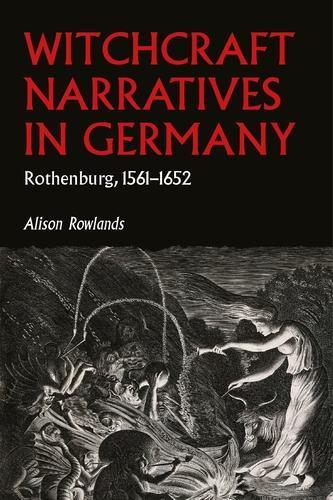
OverviewWitchcraft narratives in Germany explains why witch-trials failed to gain momentum and escalate into 'witch-crazes' in certain parts of early modern Europe. Centred on the German city of Rothenburg ob der Tauber and its rural hinterland, the study draws on the city's rich records to uncover the social and psychological tensions underlying witchcraft accusations and confessions. Remarkably, Rothenburg ob der Tauber saw just one execution for witchcraft between 1561 and 1652. This local pattern provides a vital counterpoint to prevailing historical narratives of widespread persecution, highlighting the 'relative failure' of witch-hunts in parts of Germany and questioning the assumption that mass trials were the early modern norm. Full Product DetailsAuthor: Alison RowlandsPublisher: Manchester University Press Imprint: Manchester University Press Dimensions: Width: 15.60cm , Height: 1.40cm , Length: 23.40cm Weight: 0.367kg ISBN: 9781526195722ISBN 10: 1526195720 Pages: 256 Publication Date: 20 January 2026 Audience: College/higher education , Postgraduate, Research & Scholarly Format: Paperback Publisher's Status: Active Availability: Not yet available, will be POD This item is yet to be released. You can pre-order this item and we will dispatch it to you upon it's release. This is a print on demand item which is still yet to be released. Table of ContentsAcknowledgements Map Introduction 1. ‘An honourable man should not talk about that which he cannot prove’: slander and speech about witchcraft 2. The devil’s power to delude: elite beliefs about witchcraft and magic 3. ‘One cannot … hope to obtain the slightest certainty from him’: the first child-witch in Rothenburg, 1587 4. ‘When will the burning start here?’: the Catholic challenge during the Thirty Years’ War 5. Posion, seduction and magical theft: gender and contemporary fantasies of witchcraft 6. ‘God will punish both poor and rich’: the idioms and risks of defiance in the trial of Margaretha Horn, 1652 Conclusion Appendix: Trials for witchcraft in Rothenburg ob der Tauber, 1549-1709 Bibliography Index -- .Reviews‘This book remains a masterpiece in its combination of close source readings and excellent microanalysis. It corrects the popular misconception of a widespread witch craze in Europe and offers deep insights into the history of witchcraft and gender relations using the case study of early modern Rothenburg ob der Tauber.’ —Professor Rita Voltmer, University of Trier -- . ‘This book remains a masterpiece in its combination of close source readings and excellent microanalysis. It corrects the popular misconception of a widespread witch craze in Europe and offers deep insights into the history of witchcraft and gender relations using the case study of early modern Rothenburg ob der Tauber.’ —Professor Rita Voltmer, University of Trier, Germany ‘Historians of witchcraft often investigate the rise of persecution. This book explores the opposite, untold story of how rumours of witchcraft were stopped from becoming witch trials, and how witch trials were prevented from escalating into witch hunts. Its approach is both brilliantly innovative and tragically useful for modern readers!’ —Professor Raisa Toivo, University of Tampere, Finland -- . Author InformationAlison Rowlands is Senior Lecturer in European History at the University of Essex Tab Content 6Author Website:Countries AvailableAll regions |
||||