Overview
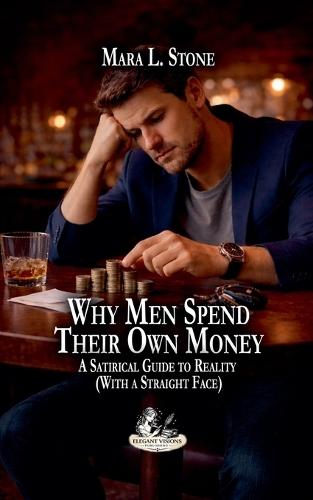
Why Men Spend Their Own Money is not a book about money-and it is not a book about women. It is a calm, incisive exploration of a familiar but rarely examined pattern: why men voluntarily invest money in romantic and emotional relationships long before clarity, reciprocity, or commitment appear. At first glance, the behavior seems simple. Men pay for dinners, gifts, trips, and shared experiences because they want to. No one forces them. No explicit promises are made. And yet, when the relationship fails to develop as hoped, the spending often becomes a source of confusion, resentment, or quiet regret. This book examines that space-between choice and expectation, generosity and investment, intention and outcome. Drawing on psychological insight, cultural observation, and subtle satire, the book explores how generosity slowly becomes confused with connection, how spending turns into a silent form of communication, and how hope transforms into obligation without ever being spoken aloud. Money, in this context, is not just currency-it becomes a proxy for effort, seriousness, and worth. Paying feels like progress. Continuing feels necessary. Stopping feels like failure. Rather than offering dating strategies, rules, or moral judgments, Why Men Spend Their Own Money focuses on internal mechanisms. It examines emotional investment, inherited social scripts, the sunk cost fallacy, and the deeply rooted belief that money can substitute for vulnerability. The book asks why men so often continue investing even when signs of misalignment are present, and why disappointment is frequently reframed as having been ""used,"" even in the absence of deception or broken promises. The narrative does not position men as victims, nor does it assign blame to women. Instead, it looks closely at voluntary behavior that later becomes inconvenient to remember as voluntary. It examines how unspoken expectations shape perception, how hope distorts risk assessment, and how cultural ideas about masculinity and provision influence decision-making in subtle but powerful ways. Written in a reflective, essay-style form, the book moves through familiar situations-coffee dates that were never just coffee, gifts without occasions, repeated investments justified by what has already been spent-and reveals the psychological logic beneath them. Each chapter builds on the same central question: not whether the spending was wrong, but whether it was understood. This is not a call for cynicism, emotional withdrawal, or financial restraint. Generosity is not portrayed as a flaw, nor is hope treated as naïveté. Instead, the book invites clarity-clarity about motivation, expectation, and responsibility. It challenges the comforting narratives people tell themselves after disappointment and replaces them with a more honest, if less soothing, understanding. Why Men Spend Their Own Money does not tell the reader what to do. It does not offer solutions, techniques, or protective rules. It names what is happening. And by naming it clearly-without accusation, without advice-it allows the reader to decide, consciously and earlier, whether the cost is worth it.
Full Product Details
Author: Mara L Stone
Publisher: Mara L. Stone
Imprint: Mara L. Stone
Dimensions:
Width: 12.70cm
, Height: 0.90cm
, Length: 20.30cm
Weight: 0.150kg
ISBN: 9798233109829
Pages: 146
Publication Date: 15 January 2026
Recommended Age: From 13 years
Audience:
Young adult
,
Teenage / Young adult
Format: Paperback
Publisher's Status: Active
Availability: Available To Order

We have confirmation that this item is in stock with the supplier. It will be ordered in for you and dispatched immediately.