Overview
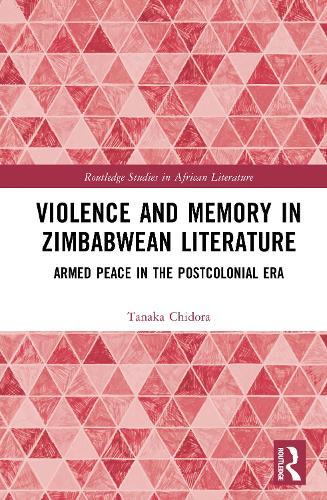
This book investigates how Zimbabwean literary texts subvert state-sponsored amnesia when it comes to the many forms of past and ongoing political violence in Zimbabwe. Zimbabwean Literature provides an important space for confronting the past and reflecting on how violence continues into the present day. This violent past was forgotten either through the promise of violence against those who sought to remember, or by depicting the violence as a necessary tool of a never-ending decolonisation process, or by appealing to the logic of letting bygones be bygones. For instance, by claiming that the five years of the Gukurahundi genocide were ‘a moment of madness’, Robert Mugabe set a climate of state-sponsored amnesia which has persisted through subsequent acts of state violence and into the Mnangagwa era. Drawing on key works by Shimmer Chinodya, Alexander Kanengoni, Yvonne Vera, Novuyo Rosa Tshuma, Brian Chikwava, Chenjerai Hove, Panashe Chigumadzi, and NoViolet Bulawayo, this book investigates how fictional works challenge this state-sponsored amnesia, in relation both to Gukurahundi and other past and ongoing forms of violence. Bringing together iconic literary texts from 1980 to 2022, the book draws a common thread through the texts’ connected histories and highlights their role in de-silencing the past. Situated at the interface of memory studies and literary criticism, this book will be of interest to researchers across the fields of African literature, politics, development, and history.
Full Product Details
Author: Tanaka Chidora
Publisher: Taylor & Francis Ltd
Imprint: Routledge
Weight: 0.640kg
ISBN: 9781032749556
ISBN 10: 1032749555
Pages: 248
Publication Date: 01 December 2025
Audience:
College/higher education
,
Professional and scholarly
,
Tertiary & Higher Education
,
Professional & Vocational
Format: Hardback
Publisher's Status: Active
Availability: Manufactured on demand

We will order this item for you from a manufactured on demand supplier.
Reviews
“Memory Studies meet African Literature: Tanaka Chidora’s literary history of ‘armed peace’ in post-independence Zimbabwe is a courageous piece of scholarship and a striking feat of the critical imagination. Delving deeply into the long histories of violence that have characterised Zimbabwe’s colonial past and post-colonial present, Chidora unravels the myths of a ‘patriotic history’ reduced to the single story of ZANU—PF’s military exploits and its authoritarian leaders as ‘fathers of the nation’ and deciphers the workings of a carefully orchestrated amnesia aiming to obliterate the life of ordinary Zimbabweans beyond armed conflict, the manifold forms and organisations of resistance against settler colonialism, the resistance of Zimbabweans against Mugabeist and post-Mugabeist autocracy, and the acts of terror by this autocracy against its own people. It is this strange mnemonic terrain constituted by both too much and too little memory that Chidora explores in his astute in-depth readings of contemporary Zimbabwean writers and their manifold literary strategies of ‘de-silencing the past.’” Frank Schulze-Engler, retired professor, Goethe University Frankfurt, Germany.
“Memory Studies meet African Literature: Tanaka Chidora’s literary history of ‘armed peace’ in post-independence Zimbabwe is a courageous piece of scholarship and a striking feat of the critical imagination. Delving deeply into the long histories of violence that have characterised Zimbabwe’s colonial past and post-colonial present, Chidora unravels the myths of a ‘patriotic history’ reduced to the single story of ZANU—PF’s military exploits and its authoritarian leaders as ‘fathers of the nation’ and deciphers the workings of a carefully orchestrated amnesia aiming to obliterate the life of ordinary Zimbabweans beyond armed conflict, the manifold forms and organisations of resistance against settler colonialism, the resistance of Zimbabweans against Mugabeist and post-Mugabeist autocracy, and the acts of terror by this autocracy against its own people. It is this strange mnemonic terrain constituted by both too much and too little memory that Chidora explores in his astute in-depth readings of contemporary Zimbabwean writers and their manifold literary strategies of ‘de-silencing the past.’” Frank Schulze-Engler, retired Professor, Goethe University Frankfurt, Germany.
Author Information
Tanaka Chidora is a Humboldt Fellow (2021–2023), a lecturer in the Department of Literary Studies at the University of Malawi and a research fellow in the Deparment of English, University of the Free State, South Africa. He is the Co-Chief Editor of Matatu: Journal for African Literary and Cultural Studies. Chidora is the author of Because Sadness is Beautiful? (2019), a collection of poems published to critical acclaim in Zimbabwe. The manuscript of his forthcoming novel, Born Location, was longlisted for the Island Prize as Carrying a Country on Your Forehead in 2023.