|
|
|||
|
||||
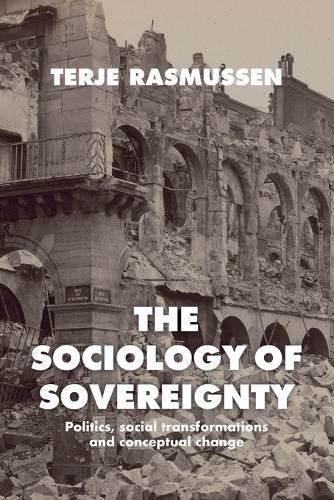
OverviewThe book examines the intellectual history of the concept of sovereignty from a sociological perspective. Informed by the sociologists Max Weber and Niklas Luhmann, it addresses the concept as the centre of constitutional controversy and as a resource to deal with paradoxes of power in constitutional democracies. It discusses the dilemmas of sovereignty that appear in the wake of the emphasis on political representation, human rights and European integration. The book marks a significant contribution to the scholarly debate on the foundation of constitutional democracy. Full Product DetailsAuthor: Terje RasmussenPublisher: Manchester University Press Imprint: Manchester University Press Dimensions: Width: 15.60cm , Height: 1.20cm , Length: 23.40cm Weight: 0.324kg ISBN: 9781526195753ISBN 10: 1526195755 Pages: 232 Publication Date: 20 January 2026 Audience: College/higher education , Professional and scholarly , Tertiary & Higher Education , Professional & Vocational Format: Paperback Publisher's Status: Active Availability: Not yet available, will be POD This item is yet to be released. You can pre-order this item and we will dispatch it to you upon it's release. This is a print on demand item which is still yet to be released. Table of ContentsPreface Introduction: a concept in action 1 A sociology of constitutions 2 Political uses of ‘sovereignty’: sociological methodologies 3 Paradox: early modern formulations of sovereignty 4 Differentiation: national sovereignty and the sovereign state 5 The political, politics and sociology 6 Constitutional symbolism 7 Human rights versus state sovereignty 8 Federal sovereignty? Index -- .Reviews'Rasmussen’s approach is useful, as it sheds light on the process through which sovereignty became what it is now, instead of sticking to its static legal understanding. The author situates sovereignty within the broader frameworks of social theory, making the book relevant to scholars of both political theory and sociology. Moreover, the book provides a thorough historical account of sovereignty that helps readers grasp the concept’s evolution. Lastly, Rasmussen’s exploration of the tensions between national sovereignty and human rights agenda and supranational governance is timely and relevant. His discussion of the complexities in reconciling sovereignty with the consequences of globalization offers valuable insights for understanding current political dynamics.' Aleksandra Spalinska, International Relations -- . Author InformationTerje Rasmussen is a sociologist and Professor of Media Studies at the University of Oslo Tab Content 6Author Website:Countries AvailableAll regions |
||||