Overview
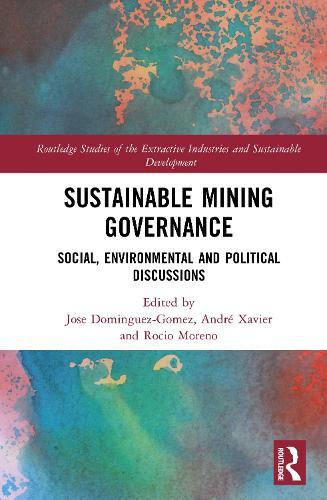
This volume provides a transdisciplinary analysis of the political, social and environmental aspects of governance and its implementation in the mining sector. In a world profoundly shaped by the energy transition and the urgency of climate change, mining faces a dual challenge. On the one hand, it is expected to play a crucial role in the shift toward a more sustainable socioeconomic model. On the other hand, it operates within a context marked by deep economic, social, political, and environmental tensions across multiple territories. This book offers a critical, transdisciplinary, and rigorous exploration of a key concept for understanding this dilemma: governance. Through a theoretical and practical journey—ranging from colonial extractivism to current models of sustainability and corporate responsibility—it provides a comprehensive look at how formal and informal power structures, community relations, social and environmental impact assessments, and regulatory frameworks shape the present and future of mining. With a participatory approach that brings together voices from academia, government, NGOs, and the private sector, the book not only analyses the various dimensions of mining governance but also presents practical examples and case studies to better understand its sociopolitical, environmental, and economic complexity. From the role of the Social License to Operate to mine closure and post-closure planning, and waste management, this work invites readers to rethink mining as a long-term territorial development project. This book will be of great interest to students and scholars of the mining and extractive industries, natural resource governance, environmental governance, and sustainable development.
Full Product Details
Author: J. Andrés Domínguez-Gómez ,
André Xavier ,
Rocio Muñoz-Moreno
Publisher: Taylor & Francis Ltd
Imprint: Routledge
Weight: 0.600kg
ISBN: 9781032622811
ISBN 10: 1032622814
Pages: 238
Publication Date: 23 December 2025
Audience:
Professional and scholarly
,
College/higher education
,
Professional & Vocational
,
Postgraduate, Research & Scholarly
Format: Hardback
Publisher's Status: Active
Availability: Not yet available

This item is yet to be released. You can pre-order this item and we will dispatch it to you upon its release.
Author Information
J. Andrés Domínguez-Gómez is Professor at the Universidad de Huelva, Spain. He specialises in social research methodologies applied to development projects, such as tourism, urban planning, infrastructure, energy or mining projects. André Xavier is Senior Manager for Natural Resources Management and Sustainable Development with Catalyste+, a non-profit organisation dedicated to promoting locally-driven solutions to enhance governance and drive economic growth. He holds an honorary professorship at the Norman B. Keevil Institute of Mining Engineering at the University of British Columbia, Canada. Rocío Muñoz-Moreno is Professor in the Department of Sociology, Social Work and Public Health at the University of Huelva, Spain. Her research focuses on the analysis and evaluation of urban policies, particularly sustainable and integrated urban development models, where governance plays an important role.