Overview
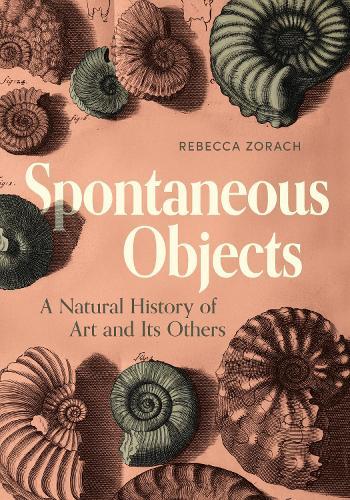
In the late medieval and early modern periods, European artists, theorists, and natural philosophers imagined Nature not simply as a force of reproduction but as an artist in its own right—a creative power capable of generating images, artifacts, and objects of beauty. Tracing this idea from the fifteenth through early nineteenth centuries, Rebecca Zorach challenges assumptions about human artistic genius and intention that have long dominated histories of art and science. With inspiration from new materialist theory, Zorach reclaims a largely disregarded undercurrent of historical thought about the powers of nature. Through case studies ranging from Renaissance centaurs and snails to Adam Smith’s beaver hat and Kant’s travelers’ tales, Zorach investigates how ideas about nature’s generative power unsettled conventional definitions of image, artifact, and artistic intention. At the same time, Zorach also confronts the violent legacies of a different vision of nature’s power: as European empires expanded, emerging natural philosophies contributed to global colonial imaginaries and racial hierarchies, reframing nature as a force to be classified, controlled, and exploited. In seeking to understand whether and how these views of nature cohere, Zorach excavates how the historical formation of the “human” and the “natural” depends on ideas about artistic production and artistic intention. A significant contribution to art history, visual culture, and environmental humanities, Spontaneous Objects will engage scholars interested in the intersections of art, science, theology, and colonial modernity.
Full Product Details
Author: Rebecca Zorach (Northwestern University)
Publisher: Pennsylvania State University Press
Imprint: Pennsylvania State University Press
Dimensions:
Width: 17.80cm
, Height: 2.70cm
, Length: 25.40cm
Weight: 0.188kg
ISBN: 9780271100432
ISBN 10: 0271100435
Pages: 286
Publication Date: 17 February 2026
Audience:
Professional and scholarly
,
Professional & Vocational
Format: Hardback
Publisher's Status: Forthcoming
Availability: Not yet available

This item is yet to be released. You can pre-order this item and we will dispatch it to you upon its release.
Reviews
“Rebecca Zorach is one of the most provocative scholars working today in the field of early modern art. Spontaneous Objects offers an irreverent feminist decoupling of the conjoined myths of ‘artistic genius’ and ‘artistic intentionality’ that continue to define certain sectors of the discipline. Along the way, Zorach paints a vivid portrait of a moment in which the boundaries between not only Art and Nature but also Art and Science were still fluid.” —Maria H. Loh, author of Titian’s Touch: Art, Magic and Philosophy “Drawing on a wealth of previously little-known visual and verbal sources, Zorach critically reassesses the complex history of European engagement with the natural, nonhuman world. While early modern writers and practitioners emphasized the generative power of matter, thereby decentering human agency, views of nonhuman nature were adopted simultaneously to justify exploitation and enslavement. This timely and foundational book reveals the diversity of premodern notions of nature and life and how these evolved into a racialized concept of modernity that sought to colonize and dominate nature.” —Christine Göttler, author of Last Things: Art and the Religious Imagination in the Age of Reform “During the Renaissance nature was perceived as capable of producing art without human intervention. Rebecca Zorach's Spontaneous Objects explores why the idea of a creative nature gradually ceded the power of representation to human hands. A fascinating meditation on the role of nature in making art.” —Paula Findlen, editor of Early Modern Things: Objects and their Histories, 1500-1800
“Rebecca Zorach is one of the most provocative scholars working today in the field of early modern art. Spontaneous Objects offers an irreverent feminist decoupling of the conjoined myths of ‘artistic genius’ and ‘artistic intentionality’ that continue to define certain sectors of the discipline. Along the way, Zorach paints a vivid portrait of a moment in which the boundaries between not only Art and Nature but also Art and Science were still fluid.” —Maria H. Loh, author of Titian’s Touch: Art, Magic and Philosophy “Drawing on a wealth of previously little-known visual and verbal sources, Zorach critically reassesses the complex history of European engagement with the natural, nonhuman world. While early modern writers and practitioners emphasized the generative power of matter, thereby decentering human agency, views of nonhuman nature were adopted simultaneously to justify exploitation and enslavement. This timely and foundational book reveals the diversity of premodern notions of nature and life and how these evolved into a racialized concept of modernity that sought to colonize and dominate nature.” —Christine Göttler, author of Last Things: Art and the Religious Imagination in the Age of Reform
Author Information
Rebecca Zorach is Mary Jane Crowe Professor of Art and Art History at Northwestern University. Her books include Blood, Milk, Ink, Gold: Abundance and Excess in the French Renaissance; The Passionate Triangle; Art for People’s Sake: Artists and Community in Black Chicago, 1965–1975; and Temporary Monuments: Art, Land, and America’s Racial Enterprise.