|
|
|||
|
||||
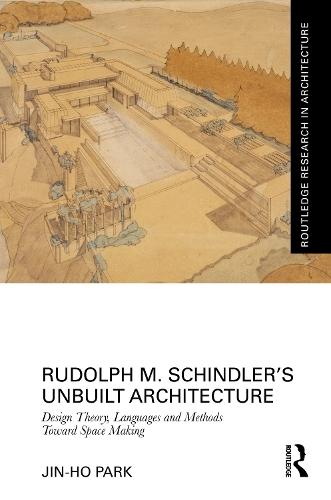
OverviewThis book explores Rudolph M. Schindler’s design theory, architectural languages, and methods, with a focus on his unbuilt projects. Drawing from his lecture notes, manuscripts, and drawings, it offers fresh insights into Schindler’s legacy, emphasizing how his work diverged from mainstream modernism and deserves greater recognition in modern architectural history. Part I investigates Schindler’s theoretical and methodical foundations, including his concept of “space architecture” and “Reference Frames in Space”—three-dimensional tools for shaping form and proportion. Using archival materials, it traces the development and evolution of his ideas within broader historical and theoretical contexts. Part II presents detailed analyses of over a dozen unbuilt projects, reconstructed through drawings and models. These case studies reveal Schindler’s design theory and methods in practice and provide a deeper understanding of his creative process and influence on modern architecture. This book will appeal to architectural scholars, students, and practitioners interested in early modernism and Californian Modernism. It also speaks to institutions, libraries, and enthusiasts of Rudolph M. Schindler’s work. With global interest in Schindler’s legacy, the book offers valuable insights for both academic and general audiences passionate about his unique architectural vision. Full Product DetailsAuthor: Jin-Ho ParkPublisher: Taylor & Francis Ltd Imprint: Routledge Weight: 0.700kg ISBN: 9781041104681ISBN 10: 1041104685 Pages: 272 Publication Date: 17 November 2025 Audience: Professional and scholarly , College/higher education , Professional & Vocational , Postgraduate, Research & Scholarly Format: Hardback Publisher's Status: Active Availability: Manufactured on demand We will order this item for you from a manufactured on demand supplier. Table of ContentsList of figures List of tables List of abbreviations Acknowledgements Introduction Part 1: R. M. Schindler’s design theory, languages and methods Ch. 1 Theoretic foundations of space making Ch. 2 Framing of space: sources and influences Part 2: Selected unbuilt works Ch. 3 New lights on the Workmen’s Colony of the Monolith Home (1919) Ch. 4 Bergen Branch Library competition (1920): Unpremiated submission with the winning scheme Ch. 5 Translucent House for Aline Barnsdall, Palos Verdes Estates (1927–28) Ch. 6 Braxton–Shore Beach House (1930): Departure from the 1920s Ch. 7 Projected in and out in the Oliver House (1931) Ch. 8 Locke House (1933): Directed rooms with L-shaped surfaces Ch. 9 Schindler Shelters (1933–42): Composition and construction for low-cost housing units and incremental clustering Ch. 10 Full-blown rhythmic forms in the Shep House (1934–38) Ch. 11 Curvilinear form in the Warshaw House (1936) Ch. 12 Toward nonorthogonal space forms in the Timme House (1938) Ch. 13 “Space Development” (1945) and its subsequent applications for the Braden House and the Schick House (1945) with the Schindler Frame Ch. 14 Tilted box form in the Elmer House (1951–52) Conclusion IndexReviewsAuthor InformationJin-Ho Park is a Professor of Architecture at Inha University in South Korea, where he teaches architectural design, theory, and history. Prior to his appointment at Inha University, he was a tenured Associate Professor at the School of Architecture, University of Hawaii at Manoa, U.S.A. He holds a Ph.D. in Architecture from the University of California, Los Angeles (UCLA). His recent publications include Pavilions for Giving (2025) and Architectural and Urban Subsymmetries (2022). Tab Content 6Author Website:Countries AvailableAll regions |
||||