Overview
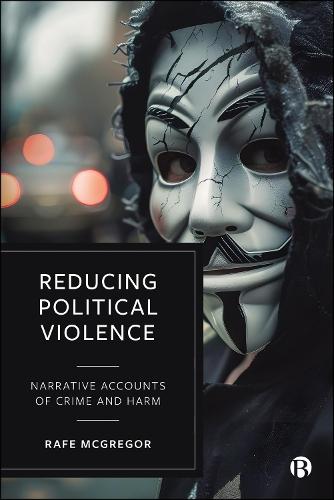
This groundbreaking book reveals how complex stories-ranging from war memoirs and political polemics to propaganda and prize-winning fiction-can shape our understanding of ideologically motivated violence. Drawing on the rich tradition of aesthetic education, it offers an original theory connecting the aesthetic, ethical and political dimensions of narrative. The author demonstrates how literature and documentary writing can unmask techniques of neutralisation, expose fictionality and suggest responses to violence and harm. Uniting criminology, philosophy and literary studies, this timely and accessible book makes a bold case for why narratives matter in tackling terrorism, war and crimes against humanity.
Full Product Details
Author: Rafe McGregor (Edge Hill University)
Publisher: Bristol University Press
Imprint: Bristol University Press
ISBN: 9781529248418
ISBN 10: 1529248418
Pages: 218
Publication Date: 15 January 2026
Audience:
College/higher education
,
General/trade
,
Postgraduate, Research & Scholarly
,
General
Format: Hardback
Publisher's Status: Forthcoming
Availability: Awaiting stock

Reviews
'Like all of McGregor's work this book reaches the highest levels of scholarly research. It works through its argument in a highly systematic manner but is, at the same time, written in a very accessible style. This is, simply put, another jewel in the crown of the humanities-inspired social sciences.' Ronnie Lippens, Keele University 'In this book, McGregor applies meticulous philosophical reasoning to work out how we might reduce political violence through narrative. His ideas on the ethical value of narrative representation and the knowledge-generating capacity of ""complex stories"" will be of enduring value to social theory, criminology, and to anyone who hopes to change minds.' Lois Presser, University of Tennessee, Knoxville 'In Reducing Political Violence McGregor offers a strikingly original defence of the idea that works of narrative art have a distinctive capacity to cultivate understanding and promote an ethical society. A fascinating feature of this book is its turn to criminology as a fresh site for thinking about art's ability to develop moral sensibilities and character. The book is ultimately a plea for the importance of aesthetic education, an idea championed by Friedrich Schiller in 1794 and here modernized and made responsive to contemporary concerns and problems. It is a must-read for anyone interested in why healthy societies need good narratives.' John Gibson, University of Louisville 'McGregor brings together literary studies, philosophy and criminology and offers a convincing portrayal of how humanities can address political violence - crimes against humanity, terrorism and war crimes. Inspiring, invigorating and thought-provoking, the book exemplifies the practical power of art to inspire social changes!' Iris Vidmar Jovanovic, University of Rijeka
Author Information
Rafe McGregor is Reader in Criminology at Edge Hill University.