Overview
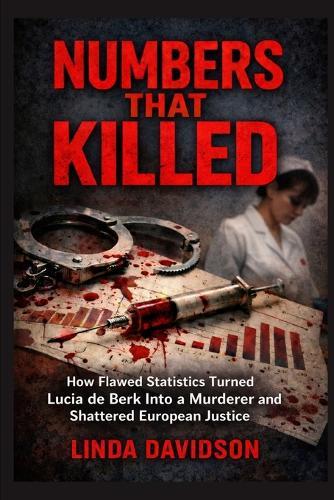
NUMBERS THAT KILLED: How Flawed Statistics Turned Lucia de Berk Into a Murderer-and Shattered European Justice A hospital ward is built for emergencies-coded alarms, sudden collapses, impossible choices. Most of the time, tragedy has no villain. Then someone starts counting. When a series of patient crises seems to follow one nurse from shift to shift, suspicion doesn't arrive like a siren. It arrives like a whisper. A sideways glance. A sentence that sounds almost reasonable: It always happens when she's here. Soon, coincidence is no longer treated as chance-but as proof. Charts replace context. Spreadsheets replace stories. And in a courtroom hungry for certainty, a number can become a verdict before the verdict is spoken. Numbers That Killed is a gripping narrative of how a Dutch nurse, Lucia de Berk, was turned into an ""angel of death"" through pattern-thinking, cognitive bias, and statistical claims presented with crushing confidence. But this is not a sensational killer-nurse tale. It's a suspenseful true-story examination of how systems break-how fear shapes facts, how institutions defend a storyline, and how one flawed calculation can eclipse the complexity of medicine and the presumption of innocence. As the case tightens like a noose, outsiders begin to question the math everyone else accepts. What they uncover forces a terrifying question into the open: What if the certainty was built on a mistake? Inside you'll find... The moment suspicion is born-and how it quietly spreads inside pressured hospital systems The ""pattern"" argument that turned ordinary tragedies into a narrative of intent A clear, plain-language breakdown of the prosecutor's fallacy and why it misleads courts How incident lists and selective counting can manufacture ""astronomical odds"" The human cost of being convicted on inference-and what exoneration can never fully restore The reckoning: how expert scrutiny helped dismantle a case that looked unbreakable The lasting lessons for justice, healthcare, and anyone who has ever mistaken emotion for evidence Reader guidance / age rangeThis book is written for adult readers and mature teens (16+) with interest in true crime, justice, medicine, and wrongful convictions. Content note: Includes discussion of patient deaths, grief, wrongful imprisonment, institutional pressure, and psychological distress (non-graphic; no gore).
Full Product Details
Author: Linda Davidson
Publisher: Independently Published
Imprint: Independently Published
Dimensions:
Width: 15.20cm
, Height: 0.60cm
, Length: 22.90cm
Weight: 0.154kg
ISBN: 9798242894556
Pages: 106
Publication Date: 06 January 2026
Audience:
General/trade
,
General
Format: Paperback
Publisher's Status: Active
Availability: Available To Order

We have confirmation that this item is in stock with the supplier. It will be ordered in for you and dispatched immediately.