Overview
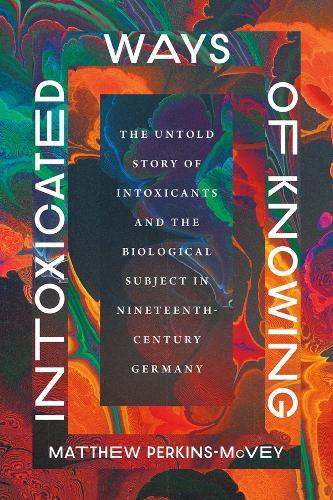
Argues that intoxication was fundamental to German physiological, psychological, and psychiatric research during the nineteenth century. Intoxicating substances can be found lurking in every corner of modern life, and Matthew Perkins-McVey's pathbreaking book offers the untold story of how they were implicated in shifting perceptions of embodiment found in the emerging sciences of the body and mind in late-nineteenth-century Germany. Their use in this experimental context gave rise to a dynamic conception of the subject within the scientific, psychological, philosophical, and sociological milieu of the era. The history of the modern biological subject, Perkins-McVey argues, turns on ""intoxicated ways of knowing."" Intoxicated Ways of Knowing identifies the state of intoxication as a tacit form of thinking and knowing with the body. Intoxicants force us to feel, intervening directly in our perceptional awareness, and, Perkins-McVey contends, they bring latent conceptual associations into the foreground of conscious thought, engendering new ways of knowing the world. The book unfurls how intoxicants affected nineteenth-century German science and how, ultimately, the connection between mental life and intoxication is taken up in the works of Friedrich Nietzsche, Max Weber, and Sigmund Freud, bringing the biological subject out of the lab and into the worlds of philosophy, psychoanalysis, sociology, and politics.
Full Product Details
Author: Matthew Perkins-McVey
Publisher: The University of Chicago Press
Imprint: University of Chicago Press
Dimensions:
Width: 15.20cm
, Height: 2.30cm
, Length: 22.90cm
Weight: 0.399kg
ISBN: 9780226846132
ISBN 10: 022684613
Pages: 320
Publication Date: 10 February 2026
Audience:
Professional and scholarly
,
Professional & Vocational
Format: Paperback
Publisher's Status: Active
Availability: Awaiting stock

The supplier is currently out of stock of this item. It will be ordered for you and placed on backorder. Once it does come back in stock, we will ship it out for you.
Reviews
“Perkins-McVey’s Intoxicated Ways of Knowing demonstrates that psychotropic substances have not only been a constant presence in modern life, but have played a critical, yet largely overlooked, role in the mainstream development of German philosophy, experimental physiology, psychology, and medicine. Through fascinating case studies of Kant, Schelling, Kraepelin, Freud, Nietzsche, Weber, and others, Perkins-McVey develops a compelling thesis that intoxicants provided the indispensable condition for the making of the modern biological subject.” -- Robert Brain, author of “The Pulse of Modernism: Physiological Aesthetics in Fin-de-Siècle Europe”
Author Information
Matthew Perkins-McVey is assistant professor of the history and philosophy of science and medicine at Technion Israel Institute of Technology.