Overview
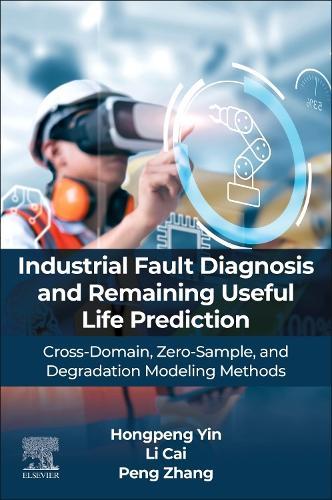
Industrial Fault Diagnosis and Remaining Useful Life Prediction: Cross-Domain, Zero-Sample, and Degradation Modeling Methods introduces zero-sample learning methods that enable fault diagnosis and Predict Remaining Useful Life (RUL) without the need for labelled fault data. This is particularly valuable in industrial settings where labelled data is scarce or unavailable. Offers step-by-step guidance on implementing zero-shot learning models using real industrial data, reducing the learning curve for practitioners; includes real-world industrial case studies to demonstrate the application of zero-sample learning techniques in various industries, such as manufacturing, energy, and transportation. Such case studies provide readers with actionable insights and practical solutions. The book covers advanced methodologies for predicting the remaining useful life of industrial equipment, supporting readers in optimizing maintenance schedules, reducing downtime and extending the lifespan of critical assets. Covers state-of-the-art algorithms, including deep learning, transfer learning and domain adaptation, tailored for zero-sample scenarios. These tools empower readers to develop robust fault diagnosis and RUL prediction systems, enhancing predictive maintenance capabilities and ensuring the reliability of industrial systems.
Full Product Details
Author: Hongpeng Yin, PhD (Chongqing University, China) ,
Li Cai, B.E. (Chongqing University, China) ,
Peng Zhang (Chongqing University, China)
Publisher: Elsevier - Health Sciences Division
Imprint: Elsevier - Health Sciences Division
Weight: 0.450kg
ISBN: 9780443442919
ISBN 10: 0443442916
Pages: 222
Publication Date: 06 February 2026
Audience:
Professional and scholarly
,
Professional & Vocational
Format: Paperback
Publisher's Status: Active
Availability: Manufactured on demand

We will order this item for you from a manufactured on demand supplier.
Author Information
Professor Hongpeng Yin is based at the School of Automation, Chongqing University in China. His current research interests mainly include data-driven process monitoring and fault diagnosis, pattern recognition, and data mining Li Cai received the B.E. degree from the School of Physics and Electronic Engineering from Hainan Normal University in 2019. He is currently undertaking a Ph.D. degree at the School of Automation, Chongqing University, China. His major research interests include data-driven fault detection and diagnosis, fault prediction, remaining useful life prediction, and (generalized) zero-shot learning Peng Zhang received the B.E. degree from College of Automation, Hangzhou Dianzi University, China in 2021. He is currently working towards a Ph.D. degree in the College of Automation, Chongqing University, China. His research interests include data mining, fault diagnosis and machine learning