|
|
|||
|
||||
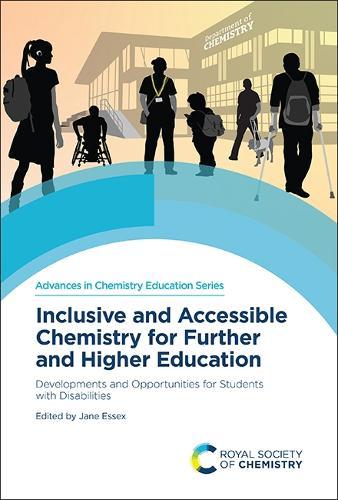
OverviewChemistry, and science more broadly, should be welcoming and accessible to everyone with an interest. However, stigma and discrimination often colour the experiences of students with disabilities. With improved awareness and understanding of the functional needs of students with different types of disability we can make chemistry in higher education accessible to all. Drawing on research evidence on approaches to inclusion and describing examples of the inclusion of chemistry students with differing types of disability, this book sets out what we know about successful inclusion. Wide ranging accounts provide a discussion of barriers faced, helpful strategies and recommendations for improving accessibility and inclusivity in higher education. Full Product DetailsAuthor: Jane Essex (University of Strathclyde, UK)Publisher: Royal Society of Chemistry Imprint: Royal Society of Chemistry Volume: Volume 14 Dimensions: Width: 15.60cm , Height: 1.90cm , Length: 23.40cm Weight: 0.622kg ISBN: 9781837675241ISBN 10: 1837675244 Pages: 288 Publication Date: 16 January 2026 Audience: Professional and scholarly , Professional & Vocational Format: Hardback Publisher's Status: Active Availability: In Print This item will be ordered in for you from one of our suppliers. Upon receipt, we will promptly dispatch it out to you. For in store availability, please contact us. Table of ContentsReviewsAuthor InformationJane is a Reader at the University of Strathclyde, Glasgow, UK. Her main work is in the field of Initial Teacher Education. Her research focus is inclusion in STEM (science, technology, engineering and mathematics) and considers how STEM can be made accessible to all learners. She is the Chair of the Association for Science Education’s Inclusive Science Education group. She is also an active member of the Royal Society of Chemistry and was awarded their Inclusion and Diversity Award in 2019. She has recently published her first book, Inclusive and Accessible Secondary Science: How to Teach Science Effectively to Students with Additional or Special Needs.’ Tab Content 6Author Website:Countries AvailableAll regions |
||||