Overview
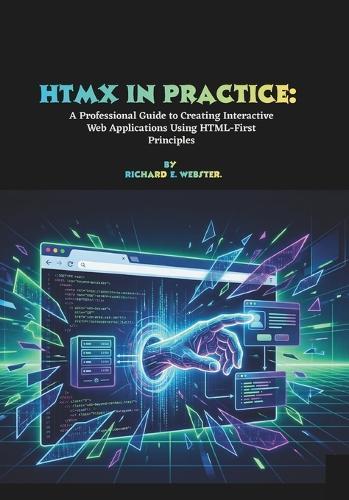
Do you remember when building a website felt... fun? Somewhere along the way, we got lost. We started trading simplicity for complexity. To build a simple ""To-Do"" list, we suddenly needed a build step, a bundler, five configuration files, a client-side router, and a state management library. We split our logic into two separate universes-Frontend and Backend-and spent half our lives writing API serializers just to make them talk to each other. I know you feel it. That sinking feeling when you open a node_modules folder that weighs heavier than the software itself. The frustration of debugging a state synchronization bug where the browser thinks the user is logged in, but the server disagrees. It doesn't have to be this way. Imagine a world where your backend-whether it's Python, Go, PHP, or C#-drives the user interface directly. Imagine deleting your webpack.config.js. Imagine building a real-time, drag-and-drop Kanban board where the ""Frontend"" is just a thin layer of HTML, and the ""Backend"" handles everything. That world exists. It's called Hypermedia, and this book is your map. What's InsideIn this comprehensive guide, we strip away the hype and focus on architectural patterns that ship software. You won't just learn syntax; you'll learn a new way of thinking. The Basics & Beyond: Master the core attributes (hx-get, hx-target, hx-swap) that replace 90% of your JavaScript. The ""Partial"" Paradigm: Learn how to architect your server to return HTML fragments instead of JSON, simplifying your entire stack. Complex UI Patterns: Build Modals, Tabs, Active Search, and ""Click-to-Edit"" interfaces using pure HTML. Client-Side Scripting: A pragmatic look at when to use Alpine.js or _hyperscript for the interactions HTML can't handle. Security & Performance: Deep dives into CSRF protection, XSS prevention, and using hx-boost to achieve SPA-like speeds. Real-World Case Study: Build a fully functional, multiplayer Kanban Board with drag-and-drop and real-time updates via Server-Sent Events (SSE). Who It's Meant For The Backend Developer: You love Python/Django, Ruby/Rails, Go, or PHP, but you hate getting bogged down in modern frontend complexity. This book gives you the power to be a ""Full Stack"" developer again. The Pragmatic Frontend Developer: You are tired of the churn. You want to build fast, accessible, and maintainable sites without downloading 200MB of dependencies. The Solo Founder: You need to move fast. You don't have time to maintain two separate codebases. You need a stack that lets you ship features in hours, not days. The web is swinging back to its roots, but this time, it has superpowers. You can keep chasing the latest JavaScript framework every six months, or you can learn the fundamental architecture that the web was built on. Stop fighting your tools. Start building your product. Grab your copy today, delete your node_modules folder, and rediscover the joy of building for the web.
Full Product Details
Author: Richard E Webster
Publisher: Independently Published
Imprint: Independently Published
Dimensions:
Width: 17.00cm
, Height: 1.30cm
, Length: 24.40cm
Weight: 0.399kg
ISBN: 9798241335265
Pages: 246
Publication Date: 26 December 2025
Audience:
General/trade
,
General
Format: Paperback
Publisher's Status: Active
Availability: Available To Order

We have confirmation that this item is in stock with the supplier. It will be ordered in for you and dispatched immediately.