Overview
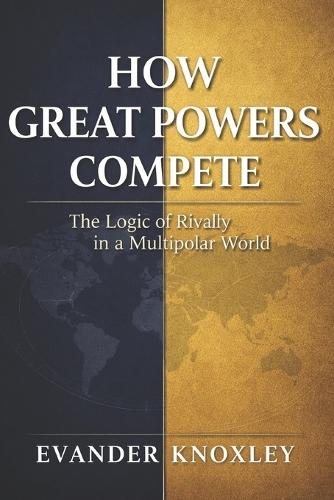
The international system has fundamentally shifted. The unipolar moment when American power stood unchallenged has ended, replaced by multipolar competition among major powers with conflicting interests and divergent visions for global order. Understanding this transformation is essential for anyone seeking to make sense of contemporary international politics, yet most analysis offers either partisan advocacy or simplistic narratives that obscure more than they reveal. How Great Powers Compete provides what the current moment demands: an analytical framework for understanding the structural dynamics that drive rivalry between the United States, China, and Russia. This book is not a prediction of inevitable war, a policy prescription for any government, or a partisan intervention in domestic debates. It is a systematic examination of how great powers compete across military, economic, technological, and institutional domains when no single state can dominate the international system. This book is for readers who: Seek to understand why states behave as they do through structural incentives and strategic logic, not just what is happening in headlines Want analytical tools that remain relevant as specific events unfold and circumstances change Recognize that serious engagement with international competition requires moving beyond comfortable assumptions about inevitable outcomes In this book, you'll discover: How the security dilemma operates in multipolar systems, driving arms races and alliance formation even when no state seeks conflict Why economic interdependence coexists with intense strategic rivalry rather than preventing it How competition manifests differently in the Indo-Pacific and European theaters based on regional power distributions and historical grievances What pathways exist through which crises can escalate to catastrophic conflict through inadvertence rather than deliberate choice Which mechanisms, from crisis communication to strategic restraint might manage competition within bounds that prevent disaster How middle powers like India, Turkey, and Indonesia navigate between great power pressures through hedging strategies What scenarios might unfold as multipolarity evolves and what factors will determine which trajectories prove most likely The analysis maintains strict neutrality regarding which great power deserves support. This is not moral relativism, but analytical necessity. Understanding why China seeks regional predominance or why Russia perceives NATO expansion as threatening does not require endorsing those positions. The book separates the question, ""Why does this actor behave this way?"" from ""Is this behavior justified?"" You must answer the first question rigorously before confronting the second responsibly. Written for intelligent readers willing to engage complexity without demanding simple answers, this book translates academic frameworks into accessible prose while preserving analytical rigor. If you finish with a clearer understanding of competitive mechanisms, better tools for evaluating claims about international politics, and recognition that great power rivalry requires clear-eyed management rather than wishful thinking or apocalyptic fatalism, the book will have succeeded. The world has entered a period of sustained great power competition. Understanding its logic is not optional.
Full Product Details
Author: Evander Knoxley
Publisher: Independently Published
Imprint: Independently Published
Dimensions:
Width: 15.20cm
, Height: 1.00cm
, Length: 22.90cm
Weight: 0.249kg
ISBN: 9798245068824
Pages: 180
Publication Date: 22 January 2026
Audience:
General/trade
,
General
Format: Paperback
Publisher's Status: Active
Availability: Available To Order

We have confirmation that this item is in stock with the supplier. It will be ordered in for you and dispatched immediately.