Overview
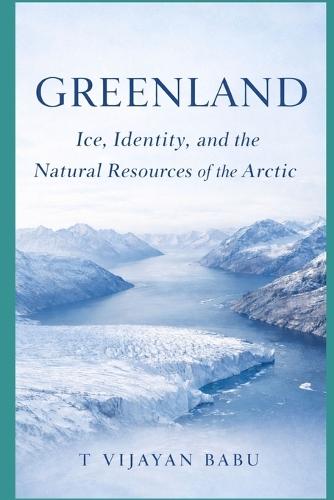
Greenland is often imagined as a vast white silence at the top of the world, but beneath its ice lies a story deeply connected to humanity's past, present, and future. Greenland: Ice, Identity, and the Human Story of the Arctic invites readers into this extraordinary land-not as a place of distant curiosity, but as a living landscape where nature, culture, and global change converge. Spanning thousands of years, the book traces Greenland's journey from its geological birth to the formation of its immense ice sheet, revealing how extreme climate and geography shaped one of Earth's most unique environments. The Arctic is presented not as an empty wilderness, but as a complex system where ice, ocean, mountains, and life are in constant interaction. At the heart of Greenland's story are its people. Through a careful and respectful exploration of Inuit civilization, the book brings forward traditions of survival, knowledge, language, and community that evolved in harmony with the Arctic world. Oral traditions, daily life, and cultural values reveal how identity is preserved even under the most demanding conditions. History unfolds gently yet clearly, from Norse exploration and settlement to centuries of contact with Europe and the gradual path toward modern self-governance. These chapters are presented without judgment, focusing instead on adaptation, continuity, and the changing relationship between Greenland and the wider world. Modern Greenland emerges as a society balancing tradition and change. From towns and villages to education, health, art, and contemporary culture, the book offers a vivid picture of daily life in one of the planet's most remote regions. The voices of the present stand alongside the wisdom of the past. A significant portion of the book is devoted to Greenland's natural resources-its oceans, fisheries, minerals, freshwater, and renewable energy potential. These resources are explored through scientific and economic perspectives, highlighting why Greenland attracts global attention while emphasizing sustainability and responsible stewardship. Climate change forms a central thread throughout the narrative. Greenland's melting ice is explained with clarity and care, showing how changes in the Arctic resonate far beyond its shores, influencing sea levels, weather systems, and global environmental balance. Rather than framing Greenland as a stage for political rivalry, the book presents it as a shared indicator of planetary health. International research, scientific cooperation, and environmental monitoring demonstrate how Greenland connects nations through knowledge rather than conflict. Written in a calm, scholarly, and accessible tone, this book bridges history, science, culture, and ethics. It is equally suited to general readers, students, researchers, and anyone seeking a deeper understanding of the Arctic world. Greenland: Ice, Identity, and the Human Story of the Arctic is ultimately a story of resilience-of land, ice, and people-and a reminder that the future of Greenland is inseparable from the future of humanity itself.
Full Product Details
Author: T Vijayan Babu ,
T V I J a Y a N
Publisher: Independently Published
Imprint: Independently Published
Dimensions:
Width: 15.20cm
, Height: 1.60cm
, Length: 22.90cm
Weight: 0.463kg
ISBN: 9798244971927
Pages: 246
Publication Date: 23 January 2026
Audience:
General/trade
,
General
Format: Paperback
Publisher's Status: Active
Availability: Available To Order

We have confirmation that this item is in stock with the supplier. It will be ordered in for you and dispatched immediately.