Overview
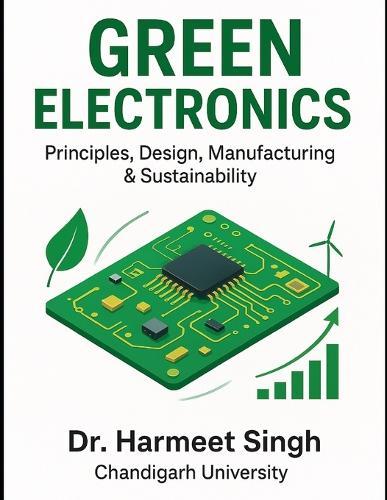
The rapid expansion of the electronics industry has reshaped modern civilization, enabling unprecedented advances in communication, healthcare, automation, computing, and global connectivity. Yet beneath these remarkable technological achievements lies a critical environmental challenge: the lifecycle of electronic products-from the extraction of materials to manufacturing, usage, and disposal-carries profound ecological and social consequences. As devices grow smaller, faster, and more complex, their embedded energy, material intensity, and waste generation expand in ways that are not immediately visible to consumers. The accelerating pace of innovation has therefore created a pressing need for a new engineering paradigm that harmonizes technological progress with ecological responsibility. This book, Green Electronics: Principles, Design, Manufacturing & Sustainability, is written at that intersection, aiming to provide a comprehensive foundation for understanding and transforming the environmental footprint of modern electronics. The purpose of this book is not merely to highlight the environmental challenges associated with electronic systems but to present the scientific, engineering, and policy-based strategies that can make the sector sustainable. The concept of ""green electronics"" goes far beyond end-of-life recycling. It encompasses material science innovations, energy-efficient circuit design, low-carbon manufacturing processes, circular product development frameworks, and forward-looking global regulations. Each chapter is designed to serve researchers, practitioners, students, and policymakers who seek an integrated understanding of how electronics can be engineered for both performance and sustainability. The structure of the book reflects the multidisciplinary nature of the field. Early chapters establish the scientific and environmental context by examining material consumption, energy use, lifecycle impacts, and the global e-waste crisis. The middle sections delve into the technological core of green electronics-covering green materials, low-power design techniques, embedded systems, energy harvesting, wireless communication strategies, sustainable semiconductor fabrication, and eco-friendly PCB manufacturing. Subsequent chapters extend this exploration to supply chain sustainability, recycling technologies, circular product design, and the environmental transformation of major industries such as consumer electronics, automotive systems, aerospace, smart cities, and healthcare. The final chapter looks ahead toward 2030-2050, exploring emerging visions of carbon-neutral electronics, biodegradable nanotechnologies, sustainable AI hardware, and global sustainability frameworks. Writing this book required synthesizing knowledge from electronics engineering, materials science, environmental science, industrial ecology, policy studies, and technology forecasting. Throughout the chapters, complex concepts are presented in a clear, accessible manner while maintaining technical depth, ensuring that readers from diverse backgrounds can engage meaningfully with the material. Although sustainability is often framed as a cost or constraint, this book seeks to illustrate how green electronics can, in fact, drive innovation, reduce long-term economic risks, and contribute to a more resilient global technology infrastructure.
Full Product Details
Author: Harmeet Singh Chandigarh University
Publisher: Independently Published
Imprint: Independently Published
Dimensions:
Width: 21.60cm
, Height: 1.30cm
, Length: 27.90cm
Weight: 0.558kg
ISBN: 9798276770185
Pages: 236
Publication Date: 30 November 2025
Audience:
General/trade
,
General
Format: Paperback
Publisher's Status: Active
Availability: Available To Order

We have confirmation that this item is in stock with the supplier. It will be ordered in for you and dispatched immediately.