Overview
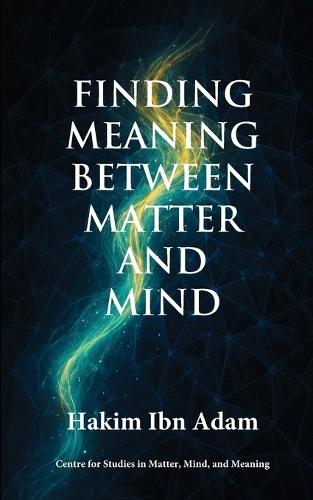
You know you're conscious. It's the one thing you can't doubt. But how does your inner life of thoughts and feelings connect to a physical world of matter and energy? How does the experience of seeing red relate to neurons firing in your brain? For centuries, we've been trapped between two impossible answers. Materialism says consciousness emerges from unconscious matter-the brain is a biological computer, and consciousness is what computation feels like from inside. But this explains nothing. How do unconscious particles suddenly produce experience? At what point does the light of consciousness switch on, and why? Idealism goes the opposite direction: consciousness is fundamental, and the physical world depends on mind. This avoids materialism's puzzles but creates new ones. If everything is mental, why is the world so stable and law-governed? Why does mathematics predict physical events so precisely? Finding Meaning Between Matter and Mind offers a way out-not by choosing between mind and matter, but by reconceiving reality itself. What if reality isn't fundamentally made of things at all-whether unconscious particles or conscious experiences? What if the basic character of reality is process: ongoing activity, continuous happening, creative advance? This book develops a systematic understanding built on four interconnected insights: Reality is process, not things. Everything is happening, becoming, changing. Mountains erode, stars burn fuel, your body replaces its cells. Even atoms are patterns of activity in quantum fields. Objects are stable patterns in ongoing process. Processes have interior character-some form of experience, however minimal. There's a continuum from the barest responsiveness of fundamental particles to human consciousness. This solves the combination problem: we're not deriving consciousness from non-consciousness, but explaining how simple experiential processes become complex, unified experiences through organization. Processes are fundamentally relational. Nothing exists in isolation. What something is depends on what it's connected to. Your identity emerges from relationships-to your body, memories, and social world. Relationships constitute what things are. Knowing is participatory. You don't passively observe reality from outside. You participate in reality through the relationships you establish with it. Quantum mechanics reveals this-observation affects what's observed. These insights give us a unified picture where consciousness and matter are aspects of one reality-not separate realms requiring mysterious connections, but different perspectives on the same processes. Physical description captures external patterns we can measure. Experiential description captures interior character. Both are real, both necessary, neither reducible to the other. This framework dissolves traditional puzzles. The quantum measurement problem becomes less mysterious when particles are processes with minimal interiority. The explanatory gap disappears when every physical process has experiential character. The stability of the physical world becomes intelligible when laws describe patterns in how processes unfold. No background in philosophy or science is required. Complex ideas are explained from the ground up using everyday examples. This book builds one coherent way of understanding reality that addresses genuine puzzles while remaining accessible.
Full Product Details
Author: Hakim Ibn Adam
Publisher: Three Roses Publishing
Imprint: Three Roses Publishing
Dimensions:
Width: 12.70cm
, Height: 0.70cm
, Length: 20.30cm
Weight: 0.122kg
ISBN: 9781999065683
ISBN 10: 1999065689
Pages: 116
Publication Date: 05 January 2026
Audience:
General/trade
,
General
Format: Paperback
Publisher's Status: Active
Availability: Not yet available

This item is yet to be released. You can pre-order this item and we will dispatch it to you upon its release.