Overview
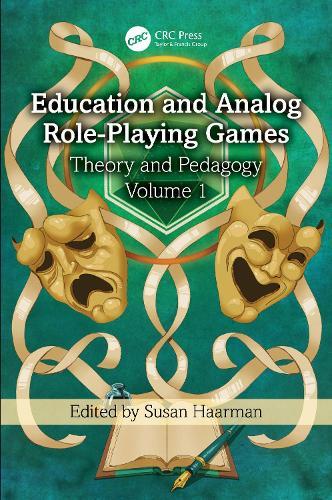
Education and Analog Role-Playing Games: Theory and Pedagogy brings together scholars and educators who explore the educational potential of analog role-playing games (tabletop role-playing games and live action role-play) through the lens of pedagogical theory. These games trace their roots to educational war games and teaching aids. This volume goes further and takes a deeper dive into why they are such effective tools for learning, imagination, and identity development. This volume offers a multidisciplinary analysis that draws on philosophy, history, psychology, and critical pedagogy. Contributors examine how analog role-playing games intersect with educational theories such as constructivism, pragmatism, and experiential learning and explore classroom and nontraditional learning contexts. The rich insights position analog role-playing games as rich sites for identity exploration, deliberation, and transformative practice. Rather than simply advocating for gamification or offering how-to guides, this book critically interrogates how these games work, what they offer learners, and what pedagogical challenges they help us address. It is a valuable resource for educators, game scholars, and instructional designers interested in leveraging narrative, collaboration, and play for powerful learning experiences.
Full Product Details
Author: Susan Haarman
Publisher: Taylor & Francis Ltd
Imprint: CRC Press
Weight: 0.560kg
ISBN: 9781041076070
ISBN 10: 104107607
Pages: 286
Publication Date: 29 December 2025
Audience:
Professional and scholarly
,
College/higher education
,
Professional & Vocational
,
Postgraduate, Research & Scholarly
Format: Paperback
Publisher's Status: Active
Availability: Manufactured on demand 
We will order this item for you from a manufactured on demand supplier.
Table of Contents
Introduction, Part I - Wisdom Check: Pedagogy and Theory, Chapter 1 - Teaching Rolls: The Practice of Teaching and Game Mastering Through the Lens of John Dewey, Chapter 2 - We Are Playing in a Material World: Thinking and Learning Through the Physical Objects of Tabletop Role-playing Games, Chapter 3 - From Diverse Roots to Dual Classing: Crystallizing The Role of Tabletop Role-playing Games in Education, With Examples from Corporate Learning & Development, Chapter 4 - Edu-larp: The Promises and Pitfalls of the Method, Part II - A Place at the Table: Inclusive and Transformative Learning through Tabletop Role-playing Game, Chapter 5 - Storyworlding Together: Tabletop Role-playing Games as Inclusive Becoming, Chapter 6 - Transforming Crisis into Growth: Neurodivergence, Bleed, and Care Ethics in Tabletop Role-playing Games, Chapter 7 - Collaboration and Empowerment for an Inclusive Environment: Social Constructivism in the Composition Classroom and Tabletop Roleplaying Games, Part III - Proficiency Bonus: Disciplinary Challenges and Opportunities, Chapter 8 - Historiography and History Role-Playing Games: The Past Is What We Play It, Chapter 9 - Edu-larp and Positive Psychology: Theory, Practice, and Case Study, Chapter 10 - Playing a Role in Democracy: Political Live Action Role-playing Games, Activism, and Deliberation, Chapter 11 - Mapping the Design Terrain between Live Action Role-playing Games and Deliberative Events for Democratic Skill Development
Reviews
Author Information
Susan Haarman, Ph.D., is Associate Director at Loyola University Chicago’s Center for Engaged Learning, Teaching, and Scholarship. She facilitates the university’s service-learning program and publishes on community-based learning. Her real love is her research on the capacity of tabletop role-playing games as formative tools for civic identity and imagination. She serves on the editorial board of the International Journal of Role-Playing and is also a professional improviser and a licensed therapist.
Tab Content 6
Author Website:
Countries Available
All regions
|