|
|
|||
|
||||
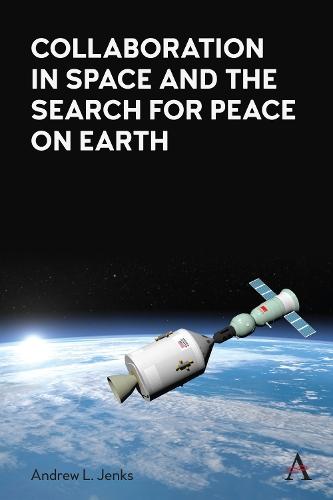
OverviewThere has been quite a bit of scholarship on the history of the space race, but collaboration in space has received little attention and has usually been dismissed as a propaganda side show. This book thus fills a critical gap by showing the importance of collaboration in space as an antidote to Cold War hostilities and as an important yet underappreciated episode in the development of science and technology in the twentieth century. Full Product DetailsAuthor: Andrew L. JenksPublisher: Anthem Press Imprint: Anthem Press Dimensions: Width: 15.30cm , Height: 1.10cm , Length: 22.90cm Weight: 0.250kg ISBN: 9781839998409ISBN 10: 1839998407 Pages: 180 Publication Date: 03 February 2026 Audience: Professional and scholarly , Professional & Vocational Format: Paperback Publisher's Status: Active Availability: Manufactured on demand We will order this item for you from a manufactured on demand supplier. Table of ContentsList of Illustrations; Introduction: An Alternative History of the Space Age; 1. Handshakes in Space and the Cold War Imaginary; 2. Transnational Identity and the Limits of Cosmic Collaboration; 3. Androgynous Coupling, Technological Fixes, and the Engineering of Peace; 4. Securitization and Secrecy in the Cold War: The View from Space; Conclusion: Cooperation and ASTP’s Enduring Legacies; Bibliography; Acknowledgments; Index.ReviewsAndrew Jenks’s Collaboration in Space and the Search for Peace on Earth challenges the dominance of the competitive paradigm in the history of early space-flight and turns our attention to international collaboration in space. Jenks’s analysis does not end in the deep of outer space. Still, it returns to Earth in order to shed light on political and societal implications resulting from the internationalization of efforts in space. - Darina Volf, A Postdoctoral Researcher at LMU Munich, Technology and Culture 63, no. 3 (2022), pp 885-86. Jenks describes how a handful of commissars and Apollo Lunar Module pilots saw space exploration as an alternative to the Cold War, but the ruthless apparatchiks who wrote the checks—Leonid Brezhnev and Richard Nixon—were not the ones with their heads in the clouds. Their pieties about “universal brotherhood” were simpleminded and solipsistic, uttered in the hope that history would remember these two warmongers as better men than they knew they were.—Matthew Lavine and Alexandra Hui. Author InformationAndrew Jenks is a Professor of History at California State University, Long Beach. Tab Content 6Author Website:Countries AvailableAll regions |
||||