Overview
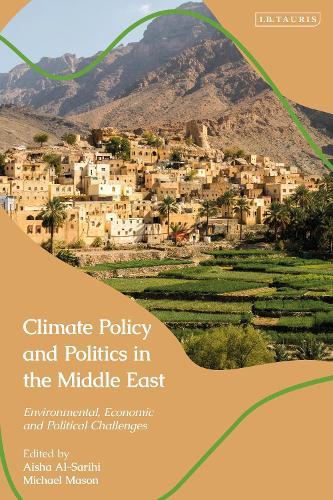
The Middle East region is one of the most vulnerable to the impacts of climate change. This book assesses the extent to which there is political and economic space for Middle Eastern states to transition into a sustainable, just and climate resilient future. The book offers a regional political economy perspective, comparing the hydrocarbon-rich Gulf States with those Arab states in the Mashreq (Levant) and Maghreb (North Africa) lacking matching resources to undertake investments in low-carbon growth and societal-wide climate change adaptation. While recent scholarship has focused on the impact of the energy sector on climate policy, this book covers other key issues including climate finance, food security, water security, Arab ‘climate urbanism’, and more immediate threats to human security such as conflict and political instability. It concludes that uneven economic development and major variations in governing capacity are more important determinants of climate mitigation and adaptation policy than exposure to the biophysical impacts of climate change. Through a comprehensive analysis of the Middle East, authors in the volume explore the challenges and opportunities to advance alternative development pathways in a post-oil era. The wide-ranging and perceptive chapters are written by leading scholars, featuring mostly researchers from the region.
Full Product Details
Author: Dr Aisha Al-Sarihi (University of Singapore) , Michael Mason (London School of Economics and Political Science (LSE), UK)
Publisher: Bloomsbury Publishing PLC
Imprint: I.B. Tauris
Dimensions:
Width: 15.20cm
, Height: 2.00cm
, Length: 23.60cm
Weight: 0.540kg
ISBN: 9780755656110
ISBN 10: 0755656113
Pages: 264
Publication Date: 27 November 2025
Audience:
Professional and scholarly
,
College/higher education
,
Professional & Vocational
,
Tertiary & Higher Education
Format: Hardback
Publisher's Status: Active
Availability: Manufactured on demand 
We will order this item for you from a manufactured on demand supplier.
Table of Contents
List of Illustrations List of Contributors Acknowledgements Abbreviations and Acronyms 1 Introduction Aisha Al-Sarihi, National University of Singapore, Singapore and Michael Mason, London School of Economics and Political Science, UK PART I: Energy Transition 2 From Grey to Green? Navigating the Geopolitics of the Energy Transition in the Middle East and North Africa Tobias Zumbraegel, University of Heidelberg, Germany PART II: Climate Finance 3 Climate Finance in the MENA Region: Current State and Possible Ways Forward Moustafa Bayoumi, Anwar Gargash Diplomatic Academy, United Arab Emirates PART III: Food-Water-Energy Nexus 4 Food Security, Climate, and Conflict – Where Does the MENA Region Stand? Nadeem Farajalla, Issam Fares Institute for Public Policy and International Affairs, American University of Beirut, Lebanon, Sana Farajalla, and Manale Abou Dagher 5 The Nexus of Climate Change and Water Security in the Middle East Mohammed Mahmoud, The Climate and Water Program, Middle East Institute, USA 6 Towards a Sustainable Water Sector in the GCC: The Role of the Private Sector Naser Alsayed PART IV: Urban Development 7 Arab Climate Urbanism Michael Mason, London School of Economics and Political Science, UK, Deen Sharp, London School of Economics and Political Science, UK, and Noura Wahby PART V: Education and Young People 8 Climate-Proofing for Development: The Impact of Climatic Disasters on the Education System, Oman Suad Al-Manji, Oman’s Ministry of Education, Oman, Hajar Mahfoodh, and Zainab Mahfoodh 9 The Role of Youth and Non-State Actors for Climate Change Action in Gulf Countries Neeshad Shafi and Mark Ortiz 10 Conclusion Aisha Al-Sarihi, National University of Singapore, Singapore and Michael Mason, London School of Economics and Political Science, UK
Reviews
Al Sarihi and Mason have put together a useful and illuminating volume to understand the diversity of the challenges and the wide scope of policy solutions facing climate policy in the Middle East. The chapter authors represent some of the best thinking on how to approach the risks of climate change across the region. -- Karen E. Young, Senior Research Scholar, Columbia University Center on Global Energy Policy, US
Author Information
Aisha Al-Sarihi is a political scientist with over a decade of research expertise in the policy, politics and governance of climate change and energy transition. She is a non-resident fellow at Chatham House’s Middle East and North Africa Programme, London, UK, the Arab Gulf States Institute in Washington DC (AGSIW), US, and the Middle East Council on Global Affairs (MECGA), Qatar. She was a former Research Fellow at the Middle East Institute of the National University of Singapore, Singapore. Michael Mason is Professor of Environmental Geography at LSE, UK, where he served as Director of the Middle East Centre from 2018-2025. He is the author/editor of six books, including co-editor of The Untold Story of the Golan Heights (I.B. Tauris, 2023).
Tab Content 6
Author Website:
Countries Available
All regions
|