|
|
|||
|
||||
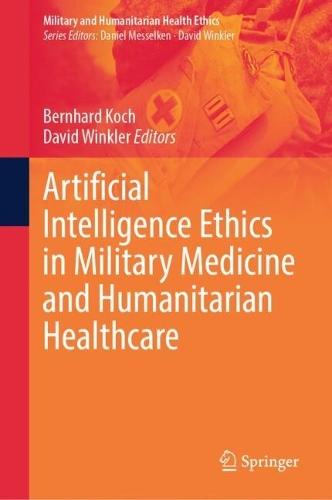
OverviewFull Product DetailsAuthor: Bernhard Koch , David WinklerPublisher: Springer Nature Switzerland AG Imprint: Springer Nature Switzerland AG ISBN: 9783032113306ISBN 10: 303211330 Pages: 240 Publication Date: 21 January 2026 Audience: Professional and scholarly , Professional & Vocational Format: Hardback Publisher's Status: Active Availability: In Print This item will be ordered in for you from one of our suppliers. Upon receipt, we will promptly dispatch it out to you. For in store availability, please contact us. Table of ContentsChapter 1. Introduction.- PArt 1- The first part of the book serves as an introduction on what is AI and how is it currently regulated.- Chapter 2. Examining Trends in AI Ethics via Quantitative Discourse Analysis.- Chapter 3. Recent Trends in AI Law and Ethics and Their Implications for Military and Humanitarian Healthcare.- Part 2- In a second part, the present volume addresses examples of AI usage in the military environment and assesses the philosophical and ethical challenges.-Chapter 4. Given The Use of AI, Can There Still Be Good Military Medical Service or Only Bad One?.- Chapter 5. Ethical Analysis of Emerging Health-Monitoring Technologies in Military Settings.- Chapter 6. Ethical, Legal, and Societal Implications of the DARPA In The Moment Program.- Chapter 7. A New Age of Dual-Use Technologies: Identifying and Evaluating AI-Induced Risks and Opportunities in Military Medical Ethics.- Chapter 8. Meaningful Human Control over AI Military Decision Support Systems.- Chapter 9. Respecting Autonomy in AI-supported Military Medicine Decision-Making.- Chapter 10. Integration, epistemic responsibility, and seamlessness.- Part 3- A third section of the volume is focusing on ethics of AI and Big Data in Humanitarian contexts.- Chapter 11. Humanitarian healthcare, digital infrastructure, and AI: an ethics talk diagnostic.- Chapter 12. Navigating risks in data collection on attacks against healthcare: new technologies and ethical considerations stemming from the Insecurity Insight’s practical experience.- Chapter 13. Ethical Capacities and Organizational Infrastructure: Navigating Opportunities and Challenges of Artificial Intelligence in Humanitarian Project Closure.ReviewsAuthor InformationBernhard Koch studied philosophy, logic and scientific theory in Munich and Vienna. In 2006, he received his doctorate in ancient philosophy. From 2007 to 2024, he was project manager, then long-time deputy director, and finally acting director of the Institute for Theology and Peace in Hamburg. He is an adjunct professor of theological ethics at the University of Freiburg and has held various teaching positions in Frankfurt and Hamburg. In 2025, he assumed a position at the Institute for Military Medical Ethics of the German Bundeswehr (InstWehrmedEthikBw) in Munich. In addition to general ethics, his research focusses on the ethics of ius in bello, technology ethics, and the ethics of AI. David Winkler is director of the Center of Reference for Education on International Humanitarian Law and Ethics of the International Committee of Military Medicine. He is a medical doctor specializing in neurology, and holds a Ph.D. in neurobiology. Colonel Winkler is a staff officer in the Swiss Armed Forces Medical Services Directorate. He conducts clinical and academic work at the University Hospital Basel, and the Cantonal Hospital Baselland, Switzerland. Tab Content 6Author Website:Countries AvailableAll regions |
||||