Overview
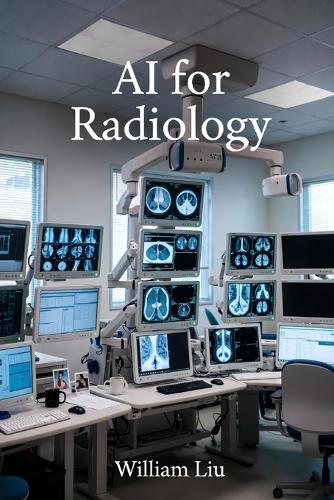
Artificial intelligence does not replace radiologists. It redefines what their judgment is allowed to mean. Radiology was the first medical specialty to be fully exposed to artificial intelligence at scale. Image recognition, automated triage, anomaly detection, workflow prioritization, and decision-support systems now operate across imaging pipelines, often before a human ever reviews a scan. These systems promise speed and accuracy. What they actually change is authority, responsibility, and the structure of diagnostic judgment itself. AI for Radiology is not a technical manual and not a vendor roadmap. It is a strategic examination of what happens when algorithms begin to see first, prioritize first, and influence diagnosis before a radiologist has exercised independent judgment. It explores how AI reshapes diagnostic authority, redistributes liability, and alters the professional role of radiologists inside increasingly automated clinical systems. This book examines why AI does not simply assist interpretation but restructures it-how probabilistic outputs compete with clinical intuition, how workflow algorithms quietly dictate attention, and how accountability becomes blurred when human review follows machine judgment rather than precedes it. It explains why false positives, false negatives, and automation bias create new diagnostic risks even as accuracy metrics improve. Drawing on real clinical and institutional dynamics, the book explores: How AI systems change what ""independent read"" actually means Why algorithmic triage reshapes urgency, attention, and error patterns How liability fragments across radiologists, institutions, and vendors Why second-reader and assistive models still shift authority How professional judgment survives-or erodes-under machine-first diagnosis Written for radiologists, department leaders, healthcare executives, and medical decision-makers, AI for Radiology reframes artificial intelligence as a governing force within diagnostic medicine rather than a neutral tool. It challenges the assumption that more accurate machines automatically strengthen clinical judgment and shows why governance, not performance, is now the central issue. AI will continue to improve. The question is who controls diagnosis when machines see first. This book explains how-and what radiology becomes next.
Full Product Details
Author: William Liu
Publisher: Independently Published
Imprint: Independently Published
Volume: 29
Dimensions:
Width: 15.20cm
, Height: 1.10cm
, Length: 22.90cm
Weight: 0.281kg
ISBN: 9798241100856
Pages: 206
Publication Date: 23 December 2025
Audience:
General/trade
,
General
Format: Paperback
Publisher's Status: Active
Availability: Available To Order

We have confirmation that this item is in stock with the supplier. It will be ordered in for you and dispatched immediately.