Overview
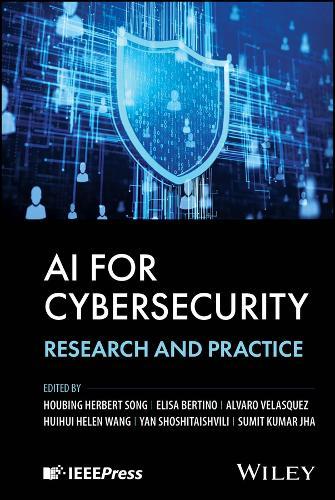
Informative reference on the state of the art in cybersecurity and how to achieve a more secure cyberspace AI for Cybersecurity presents the state of the art and practice in AI for cybersecurity with a focus on four interrelated defensive capabilities of deter, protect, detect, and respond. The book examines the fundamentals of AI for cybersecurity as a multidisciplinary subject, describes how to design, build, and operate AI technologies and strategies to achieve a more secure cyberspace, and provides why-what-how of each AI technique-cybersecurity task pair to enable researchers and practitioners to make contributions to the field of AI for cybersecurity. This book is aligned with the National Science and Technology Council’s (NSTC) 2023 Federal Cybersecurity Research and Development Strategic Plan (RDSP) and President Biden’s Executive Order on the Safe, Secure, and Trustworthy Development and Use of Artificial Intelligence. Learning objectives and 200 illustrations are included throughout the text. Written by a team of highly qualified experts in the field, AI for Cybersecurity discusses topics including: Robustness and risks of the methods covered, including adversarial ML threats in model training, deployment, and reuse Privacy risks including model inversion, membership inference, attribute inference, re-identification, and deanonymization Forensic and formal methods for analyzing, auditing, and verifying security- and privacy-related aspects of AI components Use of generative AI systems for improving security and the risks of generative AI systems to security Transparency and interpretability/explainability of models and algorithms and associated issues of fairness and bias AI for Cybersecurity is an excellent reference for practitioners in AI for cybersecurity related industries such as commerce, education, energy, financial services, healthcare, manufacturing, and defense. Fourth year undergraduates and postgraduates in computer science and related programs of study will also find it valuable.
Full Product Details
Author: Houbing Herbert Song (University of Maryland, MD, USA) , Elisa Bertino (Purdue University, IN, USA) , Alvaro Vasquez (University of Central Florida, FL) , Huihui Helen Wang (U.S. National Science Foundation, VA, USA)
Publisher: John Wiley & Sons Inc
Imprint: Wiley-IEEE Press
ISBN: 9781394293742
ISBN 10: 1394293747
Pages: 656
Publication Date: 21 January 2026
Audience:
Professional and scholarly
,
Professional & Vocational
Format: Hardback
Publisher's Status: Active
Availability: Awaiting stock 
The supplier is currently out of stock of this item. It will be ordered for you and placed on backorder. Once it does come back in stock, we will ship it out for you.
Table of Contents
List of Contributors xix Foreword xxvii About the Editors xxxi Preface xxxv Acknowledgments xxxvii 1 LLMs Are Not Few-shot Threat Hunters 1 Glenn A. Fink, Luiz M. Pereira, and Christian W. Stauffer 1.1 Overview 1 1.1.1 AI Is Not Magic 1 1.1.2 Inherent Difficulty of Human Tasks in Cybersecurity and Threat Hunting 3 1.2 Large Language Models 4 1.2.1 Background 4 1.2.2 Transformers 4 1.2.3 Pretraining and Fine-tuning 9 1.2.4 General Limitations 9 1.3 Threat Hunters 12 1.3.1 Introduction to Threat Hunting 12 1.3.2 The Dimensions of Threat Hunting 13 1.3.3 The Approaches to Threat Hunting 15 1.3.4 The Process of Threat Hunting 16 1.3.5 Challenges to Modern Threat Hunting 17 1.4 Capabilities and Limitations of LLMs in Cybersecurity 18 1.4.1 General Limitations of LLMs for Cybersecurity 18 1.4.2 General Capabilities of LLMs Useful for Cybersecurity 20 1.4.3 Applications of LLMs in Cybersecurity 22 1.5 Conclusion: Reimagining LLMs as Assistant Threat Hunter 24 References 27 2 LLMs on Support of Privacy and Security of Mobile Apps: State-of-the-art and Research Directions 29 Tran Thanh Lam Nguyen, Barbara Carminati, and Elena Ferrari 2.1 Introduction 29 2.2 Background on LLMs 32 2.2.1 Large Language Models 32 2.2.2 FSL and RAG 39 2.3 Mobile Apps: Main Security and Privacy Threats 43 2.4 LLM-based Solutions: State-of-the-art 47 2.4.1 Vulnerabilities Detection 48 2.4.2 Bug Detection and Reproduction 50 2.4.3 Malware Detection 52 2.5 An LLMs-based Approach for Mitigating Image Metadata Leakage Risks 53 2.6 Research Challenges 57 2.7 Conclusion 60 Acknowledgment 61 References 61 3 Machine Learning-based Intrusion Detection Systems: Capabilities, Methodologies, and Open Research Challenges 67 Chaoyu Zhang, Ning Wang, Y. Thomas Hou, and Wenjing Lou 3.1 Introduction 67 3.2 Basic Concepts and ML for Intrusion Detection 69 3.2.1 Fundamental Concepts 69 3.2.2 ml Algorithms for Intrusion Detection 70 3.2.3 Taxonomy of IDSs 72 3.2.4 Evaluation Metrics and Datasets 73 3.3 Capability I: Zero-day Attack Detection with ml 75 3.3.1 Understanding Zero-day Attacks and Their Impact 75 3.3.2 General Workflow of ML-IDS for Identifying Zero-day Attacks 75 3.3.3 Anomaly Detection Mechanisms 76 3.3.4 Open Research Challenges 77 3.4 Capability II: Intrusion Explainability Through XAI 79 3.4.1 Enhancing Transparency and Trust in Intrusion Detection 79 3.4.2 General Workflow of XAI 80 3.4.3 XAI Methods for IDS Transparency Enhancement 80 3.4.4 Open Research Challenges 83 3.5 Capability III: Intrusion Detection in Encrypted Traffic 84 3.5.1 Challenges in Intrusion Detection for Encrypted Traffic 84 3.5.2 Workflow of ML-IDS for Encrypted Traffic 84 3.5.3 ML-based Solutions for Encrypted Traffic Analysis 84 3.5.4 Open Research Challenges 87 3.6 Capability IV: Context-aware Threat Detection and Reasoning with GNNs 88 3.6.1 Introduction to GNNs in IDS 88 3.6.2 Workflow of GNNs for Intrusion Detection 88 3.6.3 Provenance-based Intrusion Detection by GNNs 89 3.6.4 Open Research Challenges 92 3.7 Capability V: LLMs for Intrusion Detection and Understanding 93 3.7.1 The Role of LLMs in Cybersecurity 93 3.7.2 Leveraging LLMs for Intrusion Detection 94 3.7.3 A Review of LLM-based IDS 94 3.7.4 Open Research Challenges 97 3.8 Summary 97 References 98 4 Generative AI for Advanced Cyber Defense 109 Moqsadur Rahman, Aaron Sanchez, Krish Piryani, Siddhartha Das, Sai Munikoti, Luis de la Torre Quintana, Monowar Hasan, Joseph Aguayo, Monika Akbar, Shahriar Hossain, and Mahantesh Halappanavar 4.1 Introduction 109 4.2 Motivation and Related Work 111 4.2.1 AI-supported Vulnerability Management 112 4.3 Foundations for Cyber Defense 114 4.3.1 Mapping Vulnerabilities, Weaknesses, and Attack Patterns Using LLMs 115 4.4 Retrieval-augmented Generation 117 4.5 KG and Querying 118 4.5.1 Graph Schema 119 4.5.2 Neo4j KG Implementation 122 4.5.3 Cypher Queries 123 4.6 Evaluation and Results 126 4.6.1 RAG-based Response Generation 127 4.6.2 CWE Predictions Using RAG 131 4.6.3 CWE Predictions Using GPT4-o 136 4.7 Conclusion 142 References 142 5 Enhancing Threat Detection and Response with Generative AI and Blockchain 147 Driss El Majdoubi, Souad Sadki, Zakia El Uahhabi, and Mohamed Essaidi 5.1 Introduction 147 5.2 Cybersecurity Current Issues: Background 148 5.3 Blockchain Technology for Cybersecurity 150 5.3.1 Blockchain Benefits for Cybersecurity 150 5.3.2 Existing Blockchain-based Cybersecurity Solutions 153 5.4 Combining Generative AI and Blockchain for Cybersecurity 156 5.4.1 Integration of Generative AI and Blockchain 160 5.4.2 Understanding Capabilities and Risks 160 5.4.3 Practical Benefits for Cybersecurity 161 5.4.4 Limitations and Open Research Issues 161 5.5 Conclusion 162 References 163 6 Privacy-preserving Collaborative Machine Learning 169 Runhua Xu and James Joshi 6.1 Introduction 169 6.1.1 Objectives and Structure 171 6.2 Collaborative Learning Overview 172 6.2.1 Definition and Characteristics 172 6.2.2 Related Terminologies 174 6.2.3 Collaborative Decentralized Learning and Collaborative Distributed Learning 175 6.3 Collaborative Learning Paradigms and Privacy Risks 177 6.3.1 Key Collaborative Approaches 177 6.3.2 Privacy Risks in Collaborative Learning 182 6.3.3 Privacy Inference Attacks in Collaborative Learning 183 6.4 Privacy-preserving Technologies 187 6.4.1 The Need for Privacy Preservation 187 6.4.2 Privacy-preserving Technologies 188 6.5 Conclusion 195 References 196 7 Security and Privacy in Federated Learning 203 Zhuosheng Zhang and Shucheng Yu 7.1 Introduction 203 7.1.1 Federated Learning 203 7.1.2 Privacy Threats in FL 205 7.1.3 Security Issues in FL 207 7.1.4 Characterize FL 211 7.2 Privacy-preserving FL 215 7.2.1 Secure Multiparty Computation 215 7.2.2 Trust Execution Environments 216 7.2.3 Secure Aggregation 217 7.2.4 Differential Privacy 218 7.3 Enhance Security in FL 219 7.3.1 Data-poisoning Attack and Nonadaptive Model-poisoning Attack 220 7.3.2 Model-poisoning Attack 222 7.4 Secure Privacy-preserving FL 225 7.4.1 Enhancing Security in FL with DP 225 7.4.2 Verifiability in Private FL 226 7.4.3 Security in Private FL 227 7.5 Conclusion 228 References 229 8 Machine Learning Attacks on Signal Characteristics in Wireless Networks 235 Yan Wang, Cong Shi, Yingying Chen, and Zijie Tang 8.1 Introduction 235 8.2 Threat Model and Targeted Models 239 8.2.1 Backdoor Attack Scenarios 239 8.2.2 Attackers’ Capability 240 8.2.3 Attackers’ Objective 240 8.2.4 Targeted ML Models 241 8.3 Attack Formulation and Challenges 241 8.3.1 Backdoor Attack Formulation 241 8.3.2 Challenges 244 8.4 Poison-label Backdoor Attack 246 8.4.1 Stealthy Trigger Designs 246 8.4.2 Backdoor Trigger Optimization 249 8.5 Clean-label Backdoor Trigger Design 252 8.5.1 Clean-label Backdoor Trigger Optimization 253 8.6 Evaluation 255 8.6.1 Victim ML Model 255 8.6.2 Experimental Methodology 255 8.6.3 RF Backdoor Attack Performance 257 8.6.4 Resistance to Backdoor Defense 259 8.7 Related Work 261 8.8 Conclusion 262 References 263 9 Secure by Design 267 Mehdi Mirakhorli and Kevin E. Greene 9.1 Introduction 267 9.1.1 Definitions and Contexts 268 9.1.2 Core Principles of “Secure by Design” 269 9.1.3 Principle of Compartmentalization and Isolation 273 9.2 A Methodological Approach to Secure by Design 275 9.2.1 Assumption of Breach 275 9.2.2 Misuse and Abuse Cases to Drive Secure by Design 276 9.2.3 Secure by Design Through Architectural Tactics 277 9.2.4 Shifting Software Assurance from Coding Bugs to Design Flaws 282 9.3 AI in Secure by Design: Opportunities and Challenges 283 9.4 Conclusion and Future Directions 284 References 284 10 DDoS Detection in IoT Environments: Deep Packet Inspection and Real-world Applications 289 Nikola Gavric, Guru Bhandari, and Andrii Shalaginov 10.1 Introduction 289 10.2 DDoS Detection Techniques in Research 294 10.2.1 Network-based Intrusion Detection Systems 295 10.2.2 Host-based Intrusion Detection Systems 300 10.3 Limitations of Research Approaches 303 10.4 Industry Practices for DDoS Detection 305 10.5 Challenges in DDoS Detection 309 10.6 Future Directions 311 10.7 Conclusion 313 References 314 11 Data Science for Cybersecurity: A Case Study Focused on DDoS Attacks 317 Michele Nogueira, Ligia F. Borges, and Anderson B. Neira 11.1 Introduction 317 11.2 Background 319 11.2.1 Cybersecurity 320 11.2.2 Data Science 326 11.3 State of the Art 333 11.3.1 Data Acquisition 334 11.3.2 Data Preparation 335 11.3.3 Feature Preprocessing 336 11.3.4 Data Visualization 337 11.3.5 Data Analysis 338 11.3.6 ml in Cybersecurity 339 11.4 Challenges and Opportunities 340 11.5 Conclusion 341 Acknowledgments 342 References 342 12 AI Implications for Cybersecurity Education and Future Explorations 347 Elizabeth Hawthorne, Mihaela Sabin, and Melissa Dark 12.1 Introduction 347 12.2 Postsecondary Cybersecurity Education: Historical Perspective and Current Initiatives 348 12.2.1 ACM Computing Curricula 348 12.2.2 National Centers for Academic Excellence in Cybersecurity 356 12.2.3 ABET Criteria 359 12.3 Cybersecurity Policy in Secondary Education 361 12.3.1 US High School Landscape 362 12.4 Conclusion 367 12.5 Future Explorations 368 References 368 13 Ethical AI in Cybersecurity: Quantum-resistant Architectures and Decentralized Optimization Strategies 371 Andreou Andreas, Mavromoustakis X. Constandinos, Houbing Song, and Jordi Mongay Batalla 13.1 Introduction 371 13.1.1 Motivation 372 13.1.2 Contribution 373 13.1.3 Novelty 373 13.2 Literature Review 373 13.3 Overview and Ethical Considerations in AI-centric Cybersecurity 374 13.4 AML and Privacy Risks in AI Systems 378 13.5 Forensic and Formal Methods for AI Security 380 13.5.1 Auditing Tools for Security and Privacy 383 13.5.2 Transparency, Interpretability, and Trust 383 13.5.3 Building Secure and Trustworthy AI Systems 384 13.6 Generative AI and Quantum-resistant Architectures in Cybersecurity 385 13.6.1 Opportunities and Risks 385 13.6.2 Threats and Countermeasures 386 13.6.3 Strategies for Resilience 387 13.7 Future Directions and Ethical Considerations 387 13.8 Conclusion 390 References 391 14 Security Threats and Defenses in AI-enabled Object Tracking Systems 397 Mengjie Jia, Yanyan Li, and Jiawei Yuan 14.1 Introduction 397 14.2 Related Works 398 14.2.1 UAV Object Tracking 398 14.2.2 Adversarial Tracking Attacks 399 14.2.3 Robustness Enhancement Against Attacks 400 14.3 Methods 401 14.3.1 Model Architecture 403 14.3.2 Decision Loss 403 14.3.3 Feature Loss 404 14.3.4 l 2 Norm loss 405 14.4 Evaluation 405 14.4.1 Experiment Setup 405 14.4.2 Evaluation Metrics 405 14.4.3 Results 406 14.4.4 Tracking Examples 409 14.5 Conclusion 413 Acknowledgment 413 References 413 15 AI for Android Malware Detection and Classification 419 Safayat Bin Hakim, Muhammad Adil, Kamal Acharya, and Houbing Herbert Song 15.1 Introduction 419 15.1.1 Security Threats in Android Applications 420 15.1.2 Challenges in Android Malware Detection 422 15.1.3 Current Approaches and Limitations 423 15.2 Design of the Proposed Framework 424 15.2.1 Core Components and Architecture 424 15.2.2 Feature Extraction with Attention Mechanism 425 15.2.3 Feature Extraction with Attention Mechanism 425 15.2.4 Dimensionality Reduction and Optimization 427 15.2.5 Classification Using SVMs 427 15.3 Implementation and Dataset Overview 428 15.3.1 Dataset Insights 428 15.3.2 Preprocessing Strategies 429 15.3.3 Handling Class Imbalance 429 15.3.4 Adversarial Training and Evaluation 429 15.4 Results and Insights 431 15.4.1 Experimental Setup 431 15.4.2 Performance Analysis 435 15.4.3 Performance Insights with Visualization 436 15.4.4 Benchmarking Against Existing Methods 438 15.4.5 Key Insights 439 15.5 Feature Importance Analysis 439 15.5.1 Top Feature Importance 439 15.5.2 Feature Impact Analysis Using SHAP Values 441 15.5.3 Global Feature Impact Distribution 442 15.6 Comparative Analysis and Advancements over Existing Methods 442 15.6.1 Feature Space Optimization 444 15.6.2 Advances in Adversarial Robustness 445 15.6.3 Performance Improvements 445 15.6.4 Summary of Key Advancements 445 15.7 Discussion 446 15.7.1 Limitations and Future Work 446 15.8 Conclusion 447 References 447 16 Cyber-AI Supply Chain Vulnerabilities 451 Joanna C. S. Santos 16.1 Introduction 451 16.2 AI/ML Supply Chain Attacks via Untrusted Model Deserialization 452 16.2.1 Model Deserialization 453 16.2.2 AI/ML Attack Scenarios 457 16.3 The State-of-the-art of the AI/ML Supply Chain 458 16.3.1 Commonly Used Serialization Formats 458 16.3.2 Deliberately Malicious Models Published on Hugging Face 460 16.3.3 Developers’ Perception on Safetensors 462 16.4 Conclusion 466 16.4.1 Implications for Research 466 16.4.2 Implications for Practitioners 467 References 467 17 AI-powered Physical Layer Security in Industrial Wireless Networks 471 Hong Wen, Qi Wang, and Zhibo Pang 17.1 Introduction 471 17.2 Radio Frequency Fingerprint Identification 474 17.2.1 System Model 474 17.2.2 Cross-device RFFI 476 17.2.3 Experimental Investigation 480 17.3 CSI-based PLA 481 17.3.1 System Model 482 17.3.2 Transfer Learning-based PLA 484 17.3.3 Data Augmentation 488 17.3.4 Experimental Investigation 490 17.4 PLK Distribution 493 17.4.1 System Model 493 17.4.2 AI-powered Quantization 495 17.5 Physical Layer Security Enhanced ZT Security Framework 498 17.5.1 ZT Requirements in IIoT 499 17.5.2 PLS Enhanced ZT Security Framework 500 References 502 18 The Security of Reinforcement Learning Systems in Electric Grid Domain 505 Suman Rath, Zain ul Abdeen, Olivera Kotevska, Viktor Reshniak, and Vivek Kumar Singh 18.1 Introduction 505 18.2 RL for Control 506 18.2.1 Overview of RL Algorithms 506 18.2.2 DQN Algorithm 510 18.3 Case Study: RL for Control in Cyber-physical Microgrids 513 18.4 Related Work: Grid Applications of RL 516 18.5 Open Challenges and Solutions 518 18.6 Conclusion 522 Acknowledgments 524 References 524 19 Geopolitical Dimensions of AI in Cybersecurity: The Emerging Battleground 533 Felix Staicu and Mihai Barloiu 19.1 Introduction 533 19.1.1 A Conceptual Framework 534 19.2 Foundations of AI in Geopolitics: From Military Origins to Emerging Strategic Trajectories 536 19.2.1 Historical Foundations: The Military and Intelligence Roots of Key Technologies 536 19.2.2 Early International Debates on AI Governance and Their Geopolitical Dimensions 537 19.2.3 The Two-way Influence Between AI and Geopolitics: Early Signals of Strategic Catalysts and Normative Vectors 538 19.3 The Contemporary Battleground: AI as a Strategic Variable 540 19.3.1 AI-infused IO: Precision, Persistence, and Policy Dilemmas 540 19.3.2 Fusion Technologies for Battlefield Control, Unmanned Vehicles, and AI Swarming 542 19.3.3 Regulatory Power as Soft Power: Competing Models for Global AI Norms 543 19.3.4 Global Rivalries: The US-China AI Race and the Fragmenting Digital Ecosystem 545 19.4 Beyond Today’s Conflicts: Future Horizons in AI-driven Security 548 19.4.1 2050 Hypothesis-driven Scenarios in the International System 548 19.4.2 AI in the Nuclear Quartet 551 19.4.3 AI in Kinetic Conventional Military Capabilities 553 19.4.4 AI in Cybersecurity and Information Warfare 554 19.4.5 A Holistic View of AI’s Impact on International Security 556 19.5 Conclusions and Recommendations 558 19.5.1 Integrative Insights 558 19.6 Conclusion 560 Acknowledgments 561 References 561 20 Robust AI Techniques to Support High-consequence Applications in the Cyber Age 567 Joel Brogan, Linsey Passarella, Mark Adam, Birdy Phathanapirom, Nathan Martindale, Jordan Stomps, Olivera Kotevska, Matthew Yohe, Ryan Tokola, Ryan Kerekes, and Scott Stewart 20.1 Introduction 567 20.2 Motivation 568 20.3 Explainability Measures for Deep Learning in High-consequence Scenarios 570 20.3.1 Gradient-based Methods 571 20.3.2 Perturbation-based Methods 572 20.3.3 Comparisons Between Explainability Methods 572 20.4 Improving Confidence and Robustness Measures for Deep Learning in Critical Decision-making Scenarios 573 20.4.1 Introduction 573 20.4.2 Dataset Description 574 20.4.3 Methodology 575 20.4.4 Attribution Algorithms 576 20.4.5 Confidence Measure Algorithms 576 20.4.6 Results and Analysis 581 20.4.7 Discussion and Future Work 581 20.5 Building Robust AI Through SME Knowledge Embeddings 583 20.5.1 Explicit Knowledge in Structured Formats 586 20.5.2 Fine-tuning and Evaluating Foundation Models 587 20.6 Flight-path Vocabularies for Foundation Model Training 588 20.6.1 Introduction 588 20.6.2 Dataset 589 20.6.3 Methodology 590 20.6.4 Results and Discussion 591 20.7 Promise and Peril of Foundation Models in High-consequence Scenarios 592 20.7.1 Adversarial Vulnerabilities of Foundation Models 593 20.7.2 Privacy Violation Vulnerabilities in Foundation Models 594 20.7.3 Alignment Hazards When Training Foundation Models 594 20.7.4 Performance Hazards When Inferring and Generating with Foundation Models 595 20.8 Discussion 596 Acknowledgments 596 References 596 Index 601
Reviews
Author Information
Houbing Herbert Song is Professor at the Department of Information Systems, University of Maryland, Baltimore County (UMBC). Elisa Bertino is Samuel D. Conte Distinguished Professor at the Department of Computer Science, Purdue University. Alvaro Velasquez is a program manager in the Innovation Information Office (I2O) of the Defense Advanced Research Projects Agency (DARPA) and an assistant professor at the University of Colorado Boulder. Huihui Helen Wang is a teaching professor and director of computing programs in the Khoury College of Computer Sciences at Northeastern University, based in Arlington. Yan Shoshitaishvili is an Associate Professor at Arizona State University. Sumit Kumar Jha is Eminent Scholar Chaired Professor of Computer Science at Florida International University (FIU).
Tab Content 6
Author Website:
Countries Available
All regions
|