Overview
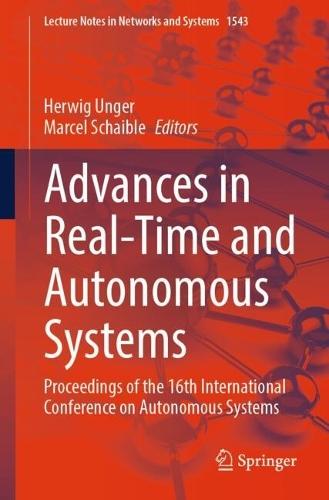
This book serves as both a cutting-edge reference and a practical guide to building AI systems that are transparent, trustworthy, and tuned for real-world impact, featuring contributors from three continents and backed by leading institutions. Unlock the next wave of graph-based artificial intelligence, fuzzy logic, and human-centric machine learning with this authoritative Springer proceedings book. Twenty-four rigorously peer-reviewed chapters—spanning semantic similarity in Wikipedia, sparse distributed representations, explainable image generation, privacy-preserving mobility analytics, sentiment mining in public transport, counterfeit-banknote detection, 5G network capacity planning, and mixed-order traffic prediction—provide a panoramic view of state-of-the-art research that turns theory into deployable solutions. Readers gain step-by-step methodologies for building restricted Boltzmann machines enhanced with fuzziness, dual-graph semantic extractors, Bloom-filter variants, and the versatile GraphLearner simulator. Each contribution includes reproducible workflows, comparative baselines, and publicly available code or datasets—accelerating adoption in academia and industry alike. Highlights include a blueprint for emotion-aware AI agents, a cloud-intelligence framework that empowers SMEs with decision support, and an adaptive metric for privacy-preserving urban-mobility sharing that balances usability and anonymity.
Full Product Details
Author: Herwig Unger ,
Marcel Schaible
Publisher: Springer International Publishing AG
Imprint: Springer International Publishing AG
Volume: 1543
ISBN: 9783031986963
ISBN 10: 3031986962
Pages: 404
Publication Date: 10 October 2025
Audience:
Professional and scholarly
,
College/higher education
,
Professional & Vocational
,
Postgraduate, Research & Scholarly
Format: Paperback
Publisher's Status: Active
Availability: Manufactured on demand

We will order this item for you from a manufactured on demand supplier.
Author Information
Prof. Dr.-Ing. habil. Dr. h.c. Herwig Unger is Professor of communication networks at FernUniversität in Hagen, Germany. He studied automation engineering at the Technical University of Ilmenau, where he earned his diploma in 1991 and his doctorate with distinction in 1994 for work on Petri-net models in multiprocessor systems. He completed his habilitation on distributed systems at the University of Rostock in 2000 and was appointed as Professor there before joining FernUniversität in 2006. Prof. Unger’s research focuses on self-organizing communication systems, adaptive algorithms, data-intensive simulations, and intelligent distributed architectures. He has led national and international projects supported by the DFG and EU and is active in interdisciplinary collaborations in Europe and Asia. His academic contributions include over 250 publications and several monographs. He has supervised numerous doctoral theses and served as Visiting Scholar in the USA, Canada, Thailand, Japan, and Vietnam. Marcel Schaible is Senior Computer Scientist at the Chair of Communication Networks, FernUniversität in Hagen. He holds a degree in computer science with a minor in electrical engineering from the Technical University of Munich. His professional background spans over 30 years in embedded real-time systems, compiler design, and distributed software architectures. Before transitioning to academia in 2019, he held multiple senior positions in industry, where he contributed to the development of JavaCard-based smartcard systems, fault-tolerant computing platforms, and embedded control software. His professional experience also includes work as Senior Software Engineer in the USA. His academic research under Prof. Herwig Unger focuses on graph-based NLP, adaptive text mining, and scalable classification systems. He is Co-Editor of the Springer book series Echtzeit and Active Member of the German Informatics Society’s technical committees on real-time and embedded systems.