Overview
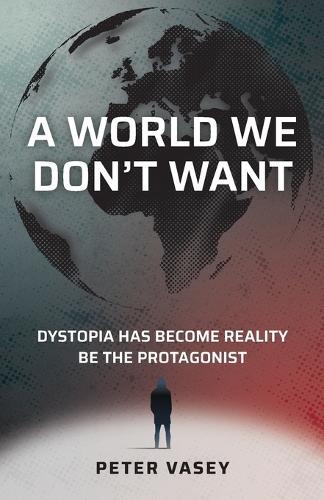
Orwell, Huxley, and Bradbury all saw failings in the way society was evolving. We read their books, watched the movies, and considered them to be great entertainment, but we are now at a crucial point where signs from their dystopian worlds are visible in the real world, and we appear to be happily heading towards something darker. A compelling and unsettling read, both passionate and well-informed, that explores the challenges facing society, business, and education as we adapt to an AI-driven world. The book draws a clear line between the new skills needed to thrive and a growing inability, and in some cases unwillingness, to critically analyse the information we consume online and through the media. These shifts are brought vividly to life through comparisons with classic dystopian fiction novels 1984, Brave New World, and Fahrenheit 451, which makes the implications feel uncomfortably close rather than theoretical. The case for rethinking how we educate and engage people, as consumers, employees, and citizens, is made with clarity and urgency. Critical thinking is positioned not as a nice-to-have, but as a core capability for the future. While the outlook is sobering, the book does offer pragmatic steps forward, leaving a faint but genuine sense that a different path is still possible.
Full Product Details
Author: Peter Vasey
Publisher: Peter Vasey
Imprint: Peter Vasey
Dimensions:
Width: 12.90cm
, Height: 1.50cm
, Length: 19.80cm
Weight: 0.281kg
ISBN: 9781919379203
ISBN 10: 1919379207
Pages: 288
Publication Date: 27 January 2026
Audience:
General/trade
,
General
Format: Paperback
Publisher's Status: Active
Availability: Not yet available

This item is yet to be released. You can pre-order this item and we will dispatch it to you upon its release.
Reviews
'A compelling and unsettling read, both passionate and well-informed, that explores the challenges facing society, business, and education as we adapt to an AI-driven world. The book draws a clear line between the new skills needed to thrive and a growing inability, and in some cases unwillingness, to critically analyse the information we consume online and through the media. These shifts are brought vividly to life through comparisons with classic dystopian fiction novels 1984, Brave New World, and Fahrenheit 451, which makes the implications feel uncomfortably close rather than theoretical. The case for rethinking how we educate and engage people, as consumers, employees, and citizens, is made with clarity and urgency. Critical thinking is positioned not as a nice-to-have, but as a core capability for the future. While the outlook is sobering, the book does offer pragmatic steps forward, leaving a faint but genuine sense that a different path is still possible. 'well-reasoned and passionate''
Author Information
I am a consultant, sociotech and someone wanting to fight against the path to dystopia. I have been in the tech industry nearly 30 years and have seen the decline in cognitive skills like deep engagement and critical thinking. The more we offload cognitive skills to technology, the greater that decline. It is not something I want to see for my son's generation or anyone else, and the trends of manipulation, dehumanisation, cognitive decline, the unchecked advancement of technologies and business, and much more, all worry me greatly. I want to try and do something to halt the current direction of travel and to try and create a better future for all.