|
|
|||
|
||||
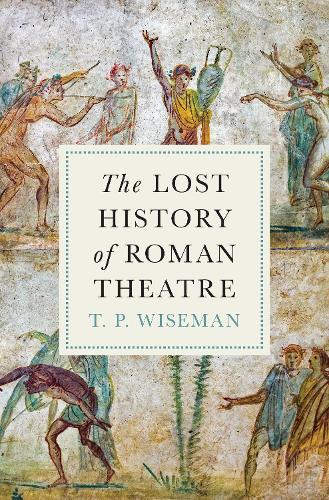
OverviewInvestigating the origins of theatre in archaic Rome Theatre was an integral part of Roman civic, religious and political life for nearly a thousand years, but our understanding of it is skewed by the haphazard survival of usable evidence. The widely accepted date for the beginning of Roman drama is 240 BC, but that is only the date of the first known dramatic works. Theatre as a public spectacle was created in Athens and in Greek Sicily at the end of the sixth century BC, when the culture of Rome, to judge by the archaeological evidence, was itself thoroughly Greek. There is therefore no need to imagine that the Romans knew nothing of drama until centuries after its inception. In The Lost History of Roman Theatre, the distinguished classics scholar T. P. Wiseman reexamines the often-obscured origins of Roman theatre. In a series of detailed investigations, Wiseman explores material ignored or inadequately treated in the modern literature, including previously overlooked information in Cicero's letters, speeches and dialogues about what theatre meant to Romans of his era. He further shows that the various styles of drama presented on the Roman stage were listed by grammarians in late antiquity who were using well-informed histories of drama now lost, and brings to light a wide range of evidence, visual as well as textual, from all that thousand-year stretch of time, to offer a new sense of the range and richness of the Romans' experience of theatre. Full Product DetailsAuthor: T.P. WisemanPublisher: Princeton University Press Imprint: Princeton University Press ISBN: 9780691273235ISBN 10: 0691273235 Pages: 328 Publication Date: 25 November 2025 Audience: College/higher education , Postgraduate, Research & Scholarly Format: Hardback Publisher's Status: Active Availability: Not yet available This item is yet to be released. You can pre-order this item and we will dispatch it to you upon its release. Table of ContentsReviewsAuthor InformationPeter Wiseman has been professor of classics and ancient history at the University of Exeter for nearly fifty years. He is the author of Catullus and His World, The Roman Audience, The House of Augustus (Princeton) and many other well-known works. In 2022 he was awarded the British Academy's Kenyon Medal for classical studies. Tab Content 6Author Website:Countries AvailableAll regions |
||||